Fintech Timelines: Why Governance Determines Who Wins and Who Fails?

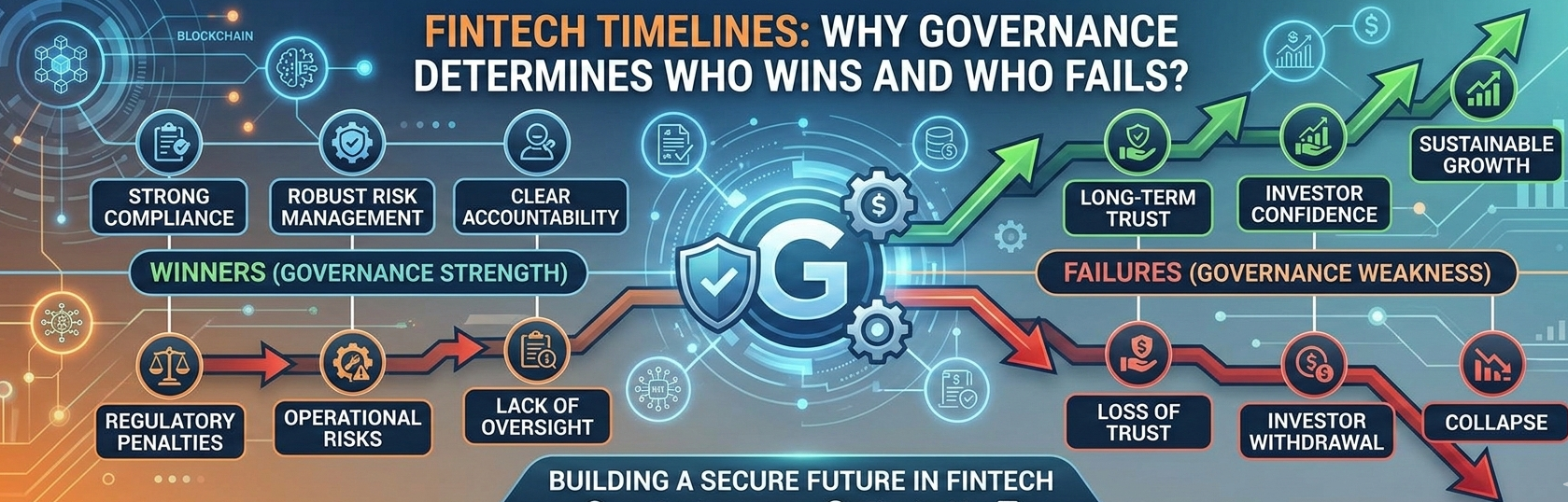
A wide digital banner titled "FINTECH TIMELINES" showing a split path between success and failure. On the top, a green "Winner" path flows through points like "Strong Compliance" and "Robust Risk Management" toward "Sustainable Growth." On the bottom, a red "Failures" path drops through "Regulatory Penalties" and "Lack of Oversight" toward "Collapse." A central "G" icon for Governance acts as the pivot point.

Fintech Timelines are not project management artifacts they are governance declarations about how an institution understands risk, authority, and capital discipline. In global payments, embedded finance, cross-border infrastructure, and regulated digital assets, timelines are rarely neutral. They signal whether leadership respects operational reality or prefers narrative convenience. They reveal whether accountability matches decision rights. And … Read more

AI in Enterprise Contract Negotiation: Why Human Oversight Still Protects Margin, Risk, and Regulatory Exposure?

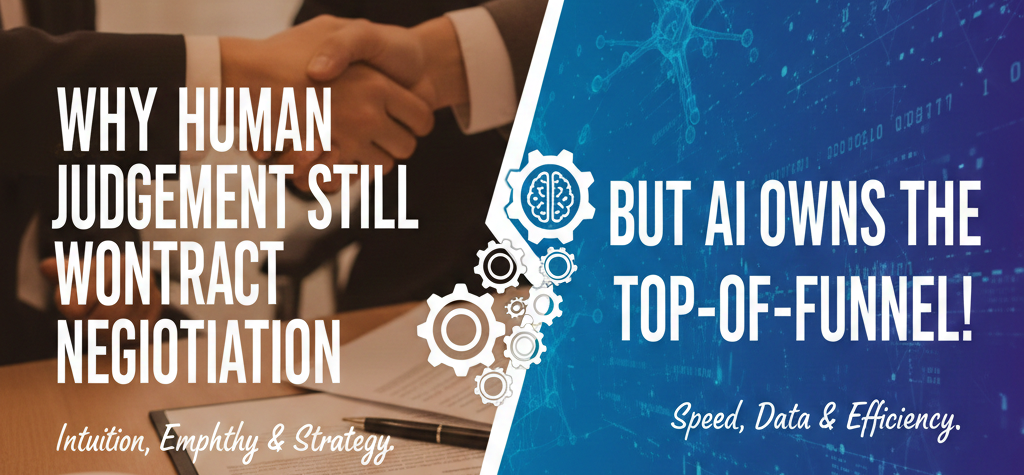
A split-screen banner showing a professional handshake in a law office on the left and a digital blue neural network on the right, representing the balance between human judgment in negotiations and AI efficiency in top-of-funnel lead generation.

AI in Enterprise Contract Negotiation conversation has matured. The question is no longer whether AI can draft clauses or suggest redlines. It can. The real question is governance: Where must optimization stop and executive accountability begin? In enterprise payments and cross-border fintech, contracts do not simply close revenue. They allocate: In APAC markets, operational resilience … Read more

Information and Communication Are the Stealth Pillars of Stable Management

Professional corporate banner featuring the quote "Information and Communication are the Stealth Pillars of Stable Management" in white sans-serif font over a dark blue digital background with glowing technological pillars.

Information and communication underpin every resilient management system, yet they are rarely treated as core leadership duties. Organizations preach transparency while quietly punishing anyone who demands real context. The result: management layers that look aligned until stress reveals the shallow shared understanding. When information routes through people instead of systems, leaders don’t manage, they become … Read more

The Quiet Destruction of Margin in Cross-Border Growth: How Expansion Strategies Erode P&L Before Leadership Notices

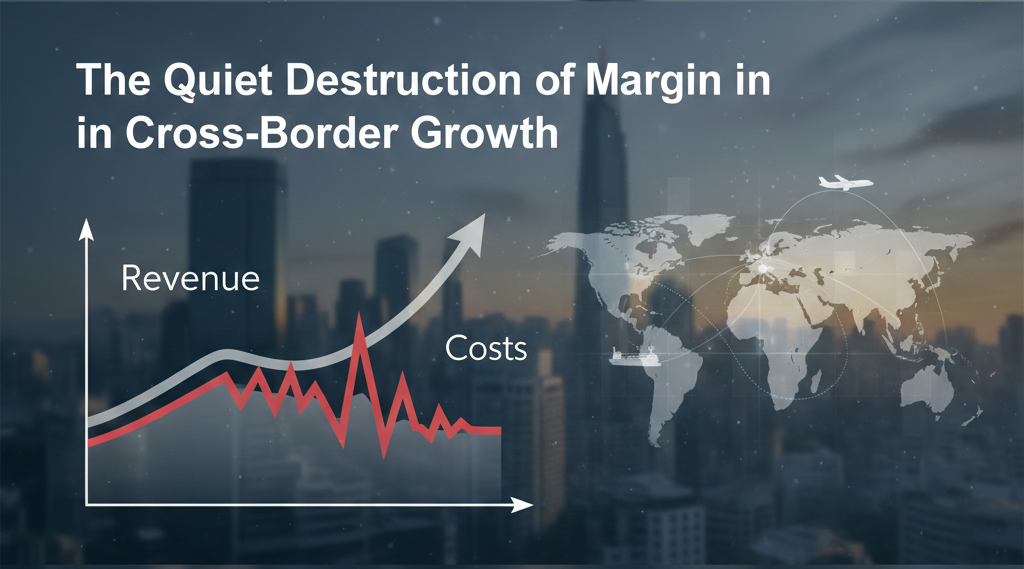
Business banner titled "The Quiet Destruction of Margin in Cross-Border Growth" featuring a financial graph where a rising revenue line is undercut by volatile red cost fluctuations against a global city backdrop.

The Quiet Destruction of Margin is rarely the result of a single bad decision. It is the cumulative outcome of well-intentioned growth layered on top of misunderstood power structures, regulatory latency, pricing optimism, and operational shortcuts that compound quietly until the P&L tells a story no one remembers authorizing.I have yet to see a cross-border … Read more

Sustainable Fintech: Embedding ESG into Cross-Border Payments and Banking Automation – Outlook 2025–2030

ESG framework applied to sustainable fintech cross-border payment systems

Sustainable fintech is no longer a marketing footnote. In 2025, ESG is no longer a compliance checkbox—it’s a strategic lever for profitability, risk mitigation, and global expansion. Global cross-border payments messaging and flows approach ~$1 quadrillion annually (including wholesale/FX per IMF 2025), while retail/commercial markets hit ~$220-250B in value with flows projected to $290T by 2030. Stablecoin on-chain volumes reached ~$27-30T in 2024 (largely trading + payments, including bot activity). Fintechs and banks embedding ESG at the infrastructure layer—leveraging AI for real-time reporting, blockchain/stablecoins for traceable low-friction flows, and ISO 20022 for rich data—are unlocking profit pools in sustainable trade finance, green remittances, and carbon-conscious lending. Laggards face penalties, divestment, and obsolescence in a decarbonizing economy.

Executive Summary

  • ESG integration turns cross-border payments from cost centers into revenue drivers via green products/efficiency.
  • Stablecoins/blockchain enable low-cost, instant settlements with indirect carbon reductions (fewer intermediaries).
  • AI automation streamlines ESG reporting/compliance, delivering 30-40% efficiency gains in workflows.
  • ISO 20022 migration (completed Nov 2025) enables structured data for transparency and potential ESG tagging.
  • Climate fintech funding surges; sustainable startups outperform broader sector in VC.
  • First movers build moats, tapping multi-trillion sustainable finance opportunities by 2030.

Read more