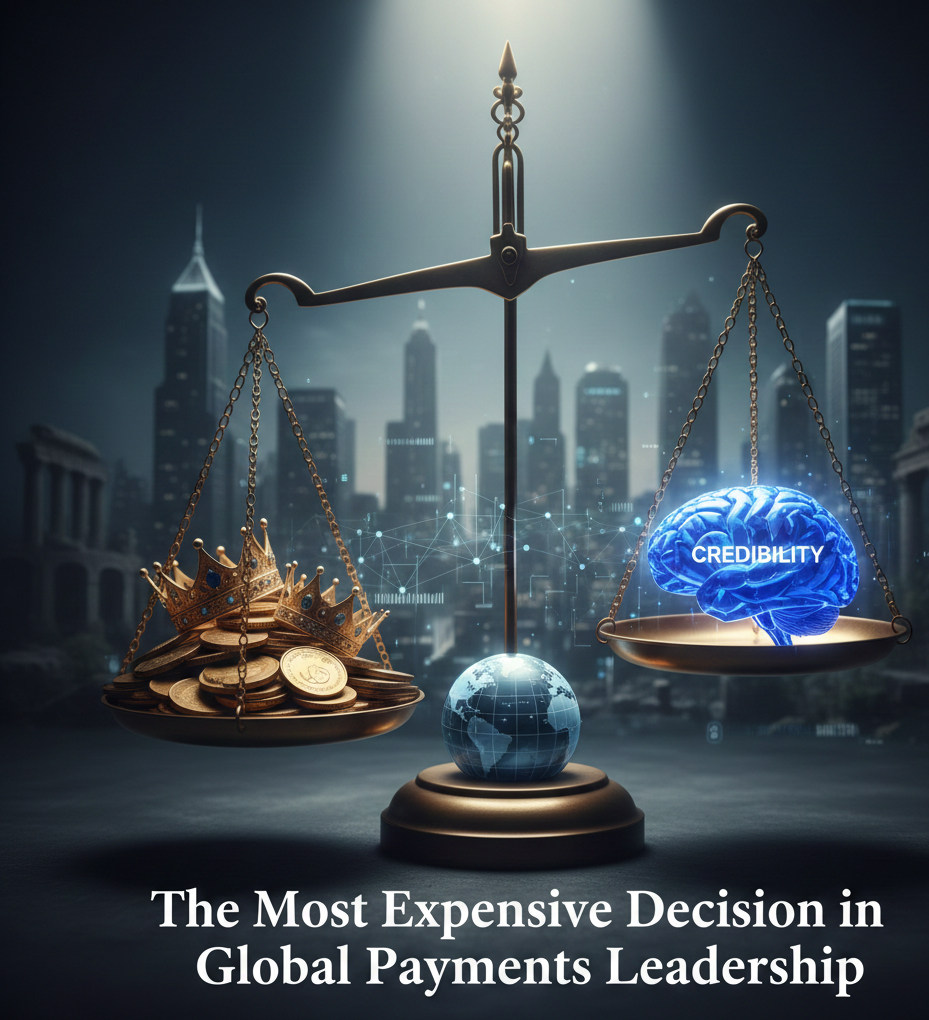
In 2025’s compressing payments landscape—real-time rails eliminating float, AI surfacing risks instantly, embedded finance diluting margins, and ISO 20022 mandating richer data—credibility is the ultimate balance-sheet asset. Silent leadership (disciplined, low-ego execution) compounds it quietly. Leadership silence (avoidance disguised as caution) erodes it fatally. The executives who thrive will master the distinction: confront risks early and decisively, even when it costs short-term revenue.
Executive Summary
Global payments revenues hit approximately $2.5 trillion in 2025, processing trillions of transactions amid structural shifts: real-time payments surging (37% of merchants accepting them, with 80-90% expecting growth), ISO 20022 migration completing in November, AI-driven operations monetizing, and projected fraud losses climbing toward $400 billion cumulatively this decade.
Margins are under relentless pressure from embedded finance, instant rails, and competition. In this environment, leadership credibility—built through proactive risk confrontation and cultural resilience—determines who retains licenses, partners, and talent.
This piece contrasts silent leadership (aggressive internal action, public restraint) with leadership silence (deferred escalation on known weaknesses). The latter has fueled recent failures in bank-fintech models and fraud scandals. CXOs must audit unspoken risks now: silence is increasingly seen as intent by regulators and markets.
Table of Contents
Credibility is no longer built on vision statements or keynote stages.
In global payments, credibility is forged in closed-door decisions: which fraud signals to escalate, which marginal partner to exit, which revenue line to kill before regulators force it.
As 2025 closes—with SWIFT’s ISO 20022 coexistence ending in November, real-time adoption accelerating, and AI exposing governance gaps faster than ever—silence has become a direct balance-sheet liability.
Silent Leadership: Disciplined Execution That Compounds Credibility
Silent leadership is not absence. It is relentless operational focus without external drama.
Scaled payments organizations—processors, sponsor banks, global platforms—succeed when leaders quietly:
- Realign risk ownership ahead of regulatory mandates
- Exit structurally weak economics rather than defend them
- Empower compliance and engineering teams to surface uncomfortable truths
This approach thrives amid 2025 realities:
- Real-time rails (now accepted by 37% of merchants, surging in usage) remove float buffers and demand continuous controls
- AI fraud models flag anomalies in seconds, outpacing legacy governance
- Embedded finance amplifies liability while compressing pricing power
- ISO 20022’s rich data (mandatory post-November) exposes weak data hygiene instantly
Silent leaders listen aggressively—to treasury on liquidity squeezes, to risk teams on model drift—and act decisively behind the scenes.
They preserve credibility capital: when they speak publicly (to boards, regulators, partners), it carries weight because their actions have already aligned.
Silent leadership builds anti-fragile institutions.
Leadership Silence: Avoidance That Detonates Credibility
Leadership silence appears prudent—wait for more data, preserve relationships, avoid near-term hits.
Underneath, it is deferral of known risks.
It manifests when:
- High-volume clients trigger fraud alerts but are deprioritized
- Compliance exceptions accumulate to protect partner revenue
- Risk escalations are parked “until next quarter” to hit growth targets
- Executives await explicit regulatory guidance on obvious gaps
Payments history repeats this pattern: anomalies normalized until external forces intervene.
Recent bank-fintech sponsorship failures, data breaches, and fraud networks exposed in 2025 trace back to deferred conviction. AI acceleration makes this subtler and deadlier—uncomfortable truths surface faster than boards can process.
Cross-border fragmentation and embedded liability create blind spots leaders hope persist.
They don’t.
Leadership silence compounds risk until credibility collapses.
The Brutal Trade-Off Payments CXOs Face in 2025
Speaking up costs:
- Partner attrition and revenue volatility
- Earlier regulatory engagement
- Board pressure over short-term contraction
Remaining silent costs more:
- License revocation risk
- Cultural erosion and talent exodus from risk functions
- Irreversible trust damage when issues surface externally
Most leaders optimize for short-term calm over long-term credibility.
In an industry projecting $3+ trillion revenues by 2028 but $400 billion+ cumulative fraud losses this decade, that calculus is failing.
Actionable Questions for Payments Executives
As ISO 20022 goes live globally and real-time becomes table stakes:
- Which known risks in your organization remain unnamed at the executive level?
- Which revenue streams depend on leadership not yet confronting structural weaknesses?
- Which dissenting voices are heard—and which are quietly sidelined?
Regulators now interpret sustained silence on emerging threats (AI bias, data gaps, fraud patterns) as intent.
The Unavoidable Conclusion
Silent leadership creates durable, credible institutions that weather compression and scrutiny.
Leadership silence creates fragile ones that appear strong—until exposure proves otherwise.
In global financial landscape, credibility is the scarcest asset: earned through early, quiet confrontation of hard truths, protected by disciplined execution.
The leaders who define the next decade will not be the most vocal. They will be those who knew precisely when silence was strength—and when it was surrender.
That distinction will separate those who retain their licenses, balance sheets, and legacies from those who do not.
Disclaimer
This article reflects the author’s professional insights based on publicly available information and industry trends as of late 2025. Views expressed are personal and do not constitute financial, legal, regulatory, or investment advice. Readers should consult qualified professionals for specific guidance.