
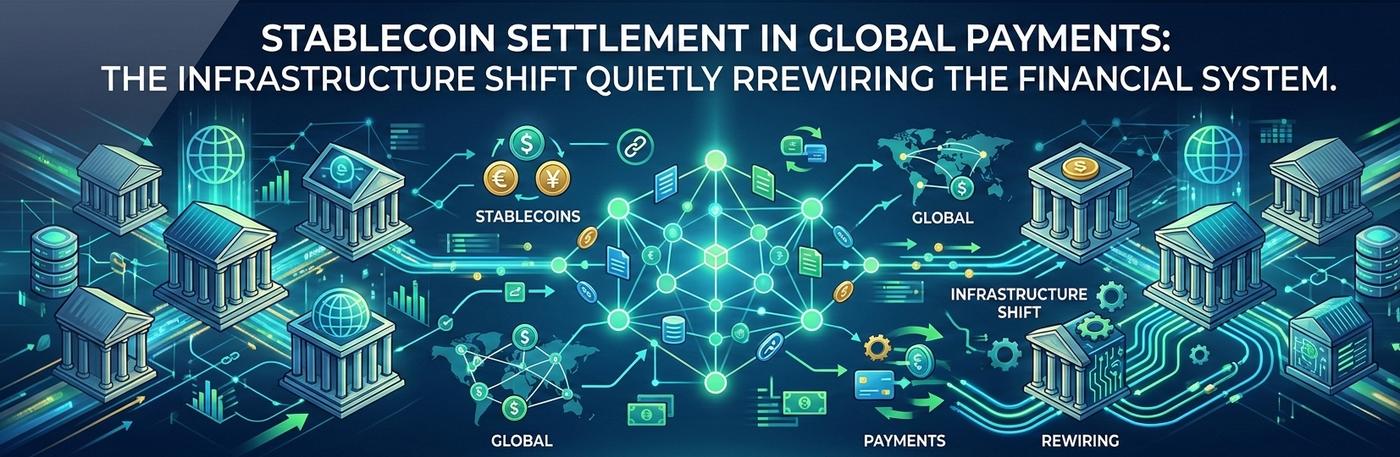
Stablecoin settlement in Global Payments is rapidly transforming the architecture of global payments by addressing structural inefficiencies that have persisted for decades within traditional financial networks. Conventional cross-border payments often rely on multiple intermediary banks, batch based settlement cycles, and limited operational hours tied to national banking systems. These constraints produce delays, high transaction costs, and liquidity friction for businesses operating internationally.
Stablecoins introduce a new mechanism for settlement. These blockchain based digital tokens are typically pegged to fiat currencies such as the U.S. dollar and backed by high quality reserve assets held by regulated issuers. Because transactions occur on distributed ledgers, transfers can settle within seconds or minutes rather than days.
The shift gained significant momentum when global payment networks began integrating stablecoins into backend settlement processes. In late 2025, Visa Inc. announced that select issuer and acquirer partners could settle payment obligations using a fully reserved dollar stablecoin on the Solana Labs blockchain. Initial pilots were limited to regulated financial institutions, but the initiative signaled a clear direction, blockchain infrastructure could enhance settlement efficiency without disrupting the familiar card based consumer experience.
Adoption has accelerated quickly. By late 2025, stablecoin settlement volumes within certain network pilots reached an annualized run rate of approximately $3.5 billion. While modest relative to the trillions processed annually through global card networks, this figure demonstrates growing institutional confidence in blockchain-based settlement rails.
Table of Contents
Executive Summary
Stablecoin settlement in Global Payments is emerging as one of the most consequential infrastructure upgrades in global payments, enabling near instant settlement, continuous network availability, and programmable financial transactions on blockchain based rails while maintaining regulatory guardrails. As global payment networks experiment with settling obligations using fully reserved dollar denominated stablecoins, transaction volumes have already reached billions in annualized activity and are accelerating across institutional pilots.
Unlike early cryptocurrency narratives centered on speculative assets, stablecoin settlement represents a structural evolution of financial plumbing. It merges the reliability of fiat currency with the efficiency of blockchain based settlement, reducing transaction finality from days to minutes while expanding operations beyond traditional banking hours. Payment networks such as Visa Inc. have piloted stablecoin settlement on blockchain infrastructure including Solana Labs, demonstrating how regulated financial institutions can integrate blockchain based liquidity management without altering the consumer facing payment experience.
This transition reflects a broader shift in the payments industry value creation is moving deeper into infrastructure rather than surface level fintech applications. If adoption continues along its current trajectory, stablecoin settlement could redefine cross-border liquidity management, merchant settlement speed, and treasury operations for banks, payment processors, and global enterprises.
Understanding How Stablecoin Settlement Works
At its core, stablecoin settlement replaces traditional fiat based clearing mechanisms with blockchain transactions executed between institutional participants. In conventional payment networks, transactions are authorized instantly but settled later through banking channels. Financial institutions reconcile net obligations at the end of settlement cycles, which may take one to three business days depending on the region and payment type. Stablecoin settlement compresses this process.
Instead of transferring funds through correspondent banking chains, participating institutions exchange blockchain based tokens representing fiat value. Because blockchain ledgers update in real time and operate continuously, settlement occurs almost immediately once transactions are confirmed.
- This model produces several structural advantages like:
- Near-Instant Finality – Traditional cross-border settlements can require multiple intermediary banks and time zone coordination. Stablecoin transactions confirm within minutes, dramatically reducing settlement delays.
- 24/7 Operational Infrastructure – Unlike banking systems that close on weekends and holidays, blockchain networks operate continuously. Institutions can settle obligations at any time, improving liquidity management and reducing funding buffers.
- Reduced Intermediary Layers – Correspondent banking chains often involve several financial institutions. Blockchain settlement reduces these layers by enabling direct transfers between participants.
These improvements have meaningful implications for cross-border payments. Global remittance costs remain high, averaging over six percent according to research by the World Bank far above the G20 target of one percent. Stablecoin infrastructure offers a path toward reducing these costs by automating settlement and foreign exchange workflows.
Stablecoin issuers such as Circle Internet Financial argue that blockchain settlement can reduce friction in global payments while maintaining full transparency and compliance through on-chain transaction verification.
Regulatory Guardrails and Institutional Trust
The long-term viability of stablecoin settlement depends heavily on regulatory clarity and institutional safeguards. Early cryptocurrency markets were defined by volatility and regulatory uncertainty, but stablecoin frameworks increasingly emphasize financial stability and oversight. Several critical guardrails underpin institutional adoption.
- Full Reserve Backing – Reputable stablecoin issuers maintain 1:1 backing with high quality liquid assets such as cash and short-term U.S. Treasury securities. This ensures that tokens can be redeemed for fiat currency at par value.
- Compliance Infrastructure – Participating institutions must adhere to established financial regulations, including anti-money laundering (AML) and know-your-customer (KYC) requirements. These compliance layers allow stablecoin settlement to operate within existing financial governance frameworks.
- Transparent Ledgers – Public blockchain networks enable verifiable transaction records. Every settlement transaction can be independently validated, improving auditability and reducing fraud risk.
- Hybrid Network Integration – Importantly, stablecoin settlement occurs primarily on the backend infrastructure of payment networks. Consumers continue using familiar payment instruments such as credit cards, bank transfers, or mobile wallets. Blockchain simply improves the efficiency of the settlement layer.
Research institutions including McKinsey & Company and global financial bodies such as the International Monetary Fund have noted that properly regulated stablecoin ecosystems could strengthen payment efficiency while maintaining systemic safeguards.
Strategic Implications for Global Payments Leaders
Beyond technical efficiency, stablecoin settlement introduces strategic implications for financial institutions and payments executives.
- Treasury and Liquidity Optimization – Real-time settlement reduces the need for large liquidity buffers typically required to manage delayed payments. Treasury teams can deploy capital more efficiently when funds move instantly.
- Cross-Border Infrastructure Simplification – Banks and payment providers may gradually reduce reliance on complex correspondent banking relationships. Blockchain rails enable direct institutional transfers across jurisdictions.
- Programmable Financial Operations – Blockchain based payments introduce programmability automated financial actions triggered by predefined conditions. Examples include real-time merchant payouts, automated escrow releases, and dynamic supply-chain financing.
- Competitive Pressure on Legacy Infrastructure – As stablecoin networks mature, legacy settlement systems could face competitive pressure. Institutions that adopt hybrid blockchain infrastructure early may gain operational advantages in cost and settlement speed.
Reports from firms such as Oliver Wyman suggest that programmable settlement could unlock entirely new financial products built around real-time liquidity management. Meanwhile, venture investment and ecosystem development highlighted in research from Andreessen Horowitz and infrastructure initiatives by Stripe continue to accelerate innovation around stablecoin based payments.
The Broader Fintech Infrastructure Shift
The rise of stablecoin settlement reflects a broader shift in the fintech landscape. During the early fintech boom of the 2010s, most innovation focused on consumer facing applications digital wallets, neobanks, and mobile payment interfaces. These companies improved the user experience but often relied on traditional financial infrastructure beneath the surface.
Today, innovation is moving deeper into financial plumbing. Blockchain based settlement networks, tokenized assets, and programmable financial infrastructure are redefining how value moves across the global economy. Stablecoins serve as the bridge connecting traditional finance with blockchain-based infrastructure.
This evolution does not replace existing payment systems overnight. Instead, it produces hybrid networks where legacy rails coexist with blockchain settlement layers. Over time, the efficiency advantages of these systems may gradually reshape how banks, payment processors, and multinational corporations manage global liquidity.
The Quiet Infrastructure Revolution
Stablecoin settlement may not capture headlines in the same way speculative cryptocurrency markets once did. Yet its long-term significance could prove far greater. By combining the stability of fiat currency with the efficiency of blockchain infrastructure, stablecoins offer a practical mechanism for modernizing global payments without disrupting the consumer experience. Settlement becomes faster, networks operate continuously, and financial operations gain programmability.
The key question now is not whether stablecoin settlement will exist within global payments infrastructure, but how rapidly institutions will adopt it and how regulators will shape its governance. If current pilots scale successfully, stablecoin settlement could represent one of the most important financial infrastructure upgrades since the rise of digital card networks in the late twentieth century.
For payments leaders, the implication is clear, the next competitive advantage may not come from building new payment apps, but from modernizing the infrastructure that moves money beneath them.
Disclaimer: This article is for informational purposes only and does not constitute financial, investment, or legal advice. All referenced developments are based on publicly available sources as of March 2026. The payments landscape evolves rapidly; readers should consult qualified professionals and verify current information independently before making decisions. No endorsements of specific products, services, or entities are implied.