
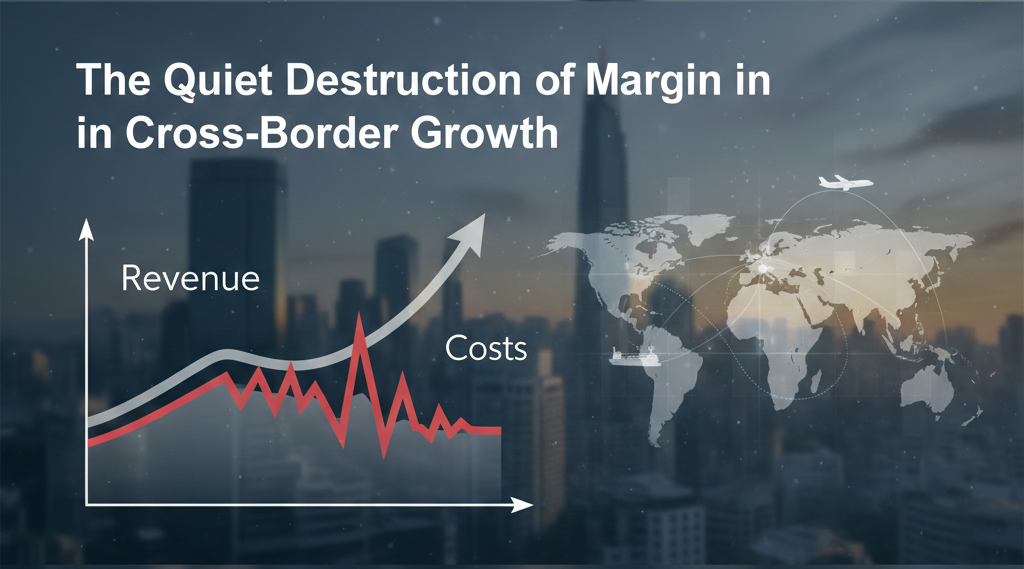

Phantom P&L is the revenue loss that never appears on your income statement, but quietly erodes your APAC payment corridors through authorization latency. In 2020, I watched a South Asia based fintech lose $4.2M in six months on a single cross-border corridor (SGD-IDR-USD). Not from fraud. Not from regulatory rejection. But from authorization latency.
The country manager in Jakarta had accountability for $18M annual revenue. She lacked authority to approve vendor contracts above SGD20,000 without cascading sign-offs through Regional HQ. A critical liquidity provider switch necessary because Bank Indonesia (BI) suddenly required enhanced KYC documentation and it stalled for 11 weeks. During those 77 days, transactions routed through a backup corridor charging 34 bps higher FX spreads. The leakage was $47,000 daily. By the time we got the approval for the vendor change, the original liquidity provider had frozen their facility entirely under new BI guidance.
This is not “accountability without authority.” This is the Phantom P&L—a shadow profit-and-loss center created when regulatory compliance owns the no but operational leadership owns the failure.