
Credibility: The Most Expensive Decision in Global Payments Leadership

A conceptual image representing global payments leadership featuring a golden scale balanced over a digital globe. One side of the scale holds a crown and gold coins, while the other side holds a glowing blue brain with the word "CREDIBILITY" inscribed. The background features a dark, cinematic city skyline, emphasizing high-stakes financial decision-making.

In 2025’s compressing payments landscape—real-time rails eliminating float, AI surfacing risks instantly, embedded finance diluting margins, and ISO 20022 mandating richer data—credibility is the ultimate balance-sheet asset. Silent leadership (disciplined, low-ego execution) compounds it quietly. Leadership silence (avoidance disguised as caution) erodes it fatally. The executives who thrive will master the distinction: confront risks early and decisively, even when it costs short-term revenue.

Executive Summary

Global payments revenues hit approximately $2.5 trillion in 2025, processing trillions of transactions amid structural shifts: real-time payments surging (37% of merchants accepting them, with 80-90% expecting growth), ISO 20022 migration completing in November, AI-driven operations monetizing, and projected fraud losses climbing toward $400 billion cumulatively this decade.

Margins are under relentless pressure from embedded finance, instant rails, and competition. In this environment, leadership credibility—built through proactive risk confrontation and cultural resilience—determines who retains licenses, partners, and talent.

This piece contrasts silent leadership (aggressive internal action, public restraint) with leadership silence (deferred escalation on known weaknesses). The latter has fueled recent failures in bank-fintech models and fraud scandals. CXOs must audit unspoken risks now: silence is increasingly seen as intent by regulators and markets.
Read more

Global Payments Trends 2025: Power Shifts, Risk Transfer, and Margin Compression Reshaping the Industry

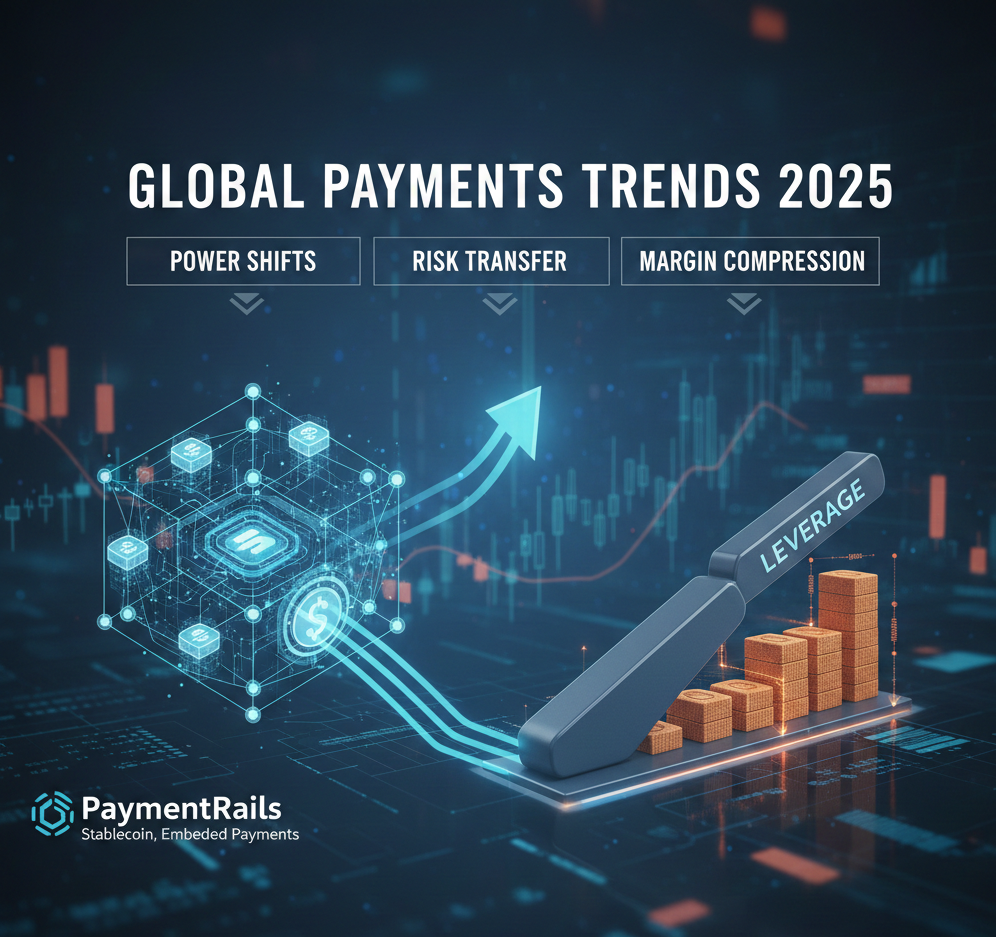
Futuristic fintech graphic illustrating "Global Payments Trends 2025" for PaymentRails, featuring stablecoin and embedded payments data flowing into a "Leverage" lever, highlighting power shifts, risk transfer, and margin compression.

Global payments in 2025 are no longer a race for faster rails or broader reach. In 2025, the fintech landscape have matured beyond speed and reach. Real-time rails, APIs, and ISO 20022 are now baseline. The real transformation is structural: innovation redistributes control, margins, and balance-sheet risk—often from incumbents to platforms and fintechs.

For executives, the question shifts from “How do we innovate?” to “Who captures value as payments become invisible, programmable, and embedded?”

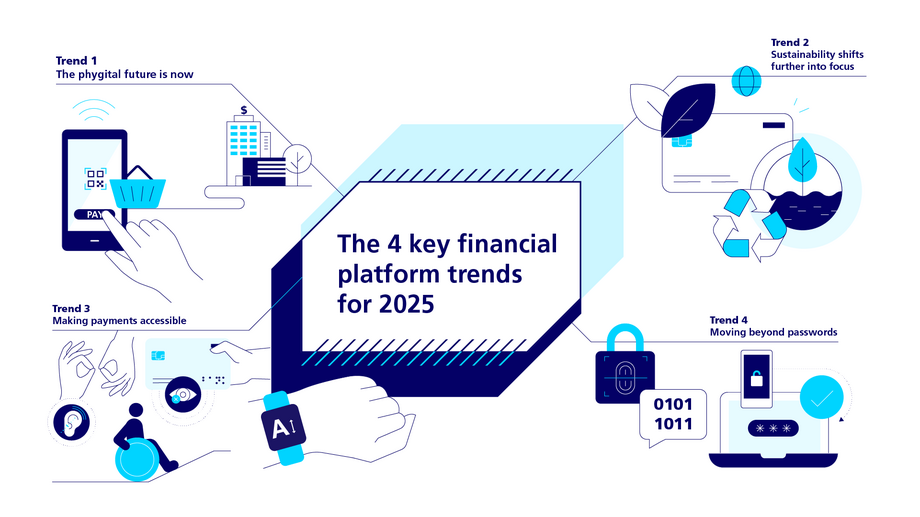
Spotlight-4-Key-Trends-Platforms

Executive Summary

Payments mechanics are converging into utilities. Differentiation now lies in data control, decision logic, risk governance, and margin defense amid automation.

Key forces:

  • Embedded finance transfers risk to distribution points.
  • Real-time systems unlock liquidity but heighten fragility.
  • Modular stacks accelerate commoditization.
  • AI reallocates margins probabilistically.
  • Sustainability incentives (or lack thereof) shape outcomes.

Leaders who explicitly govern these shifts will dominate; those relying on innovation alone risk value leakage.

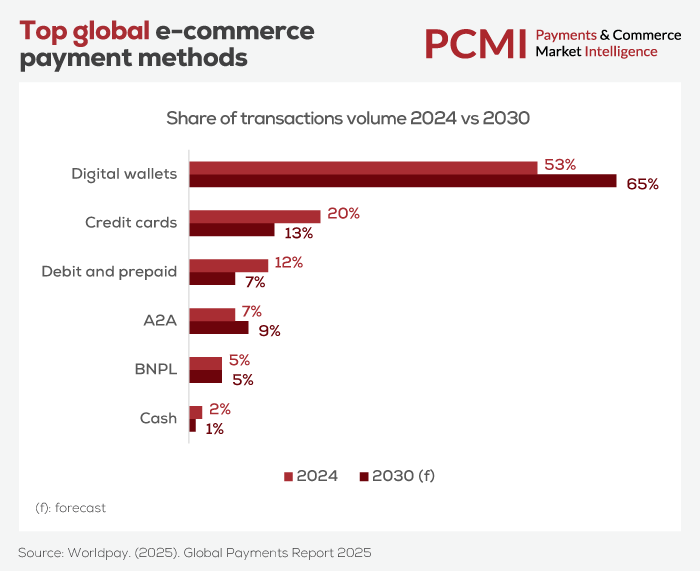
Top_Global_Payment_Methods_2025

Read more

The Growth and Future of Multirail Payment Ecosystems: Why “One Rail to Rule Them All” Is Dead”

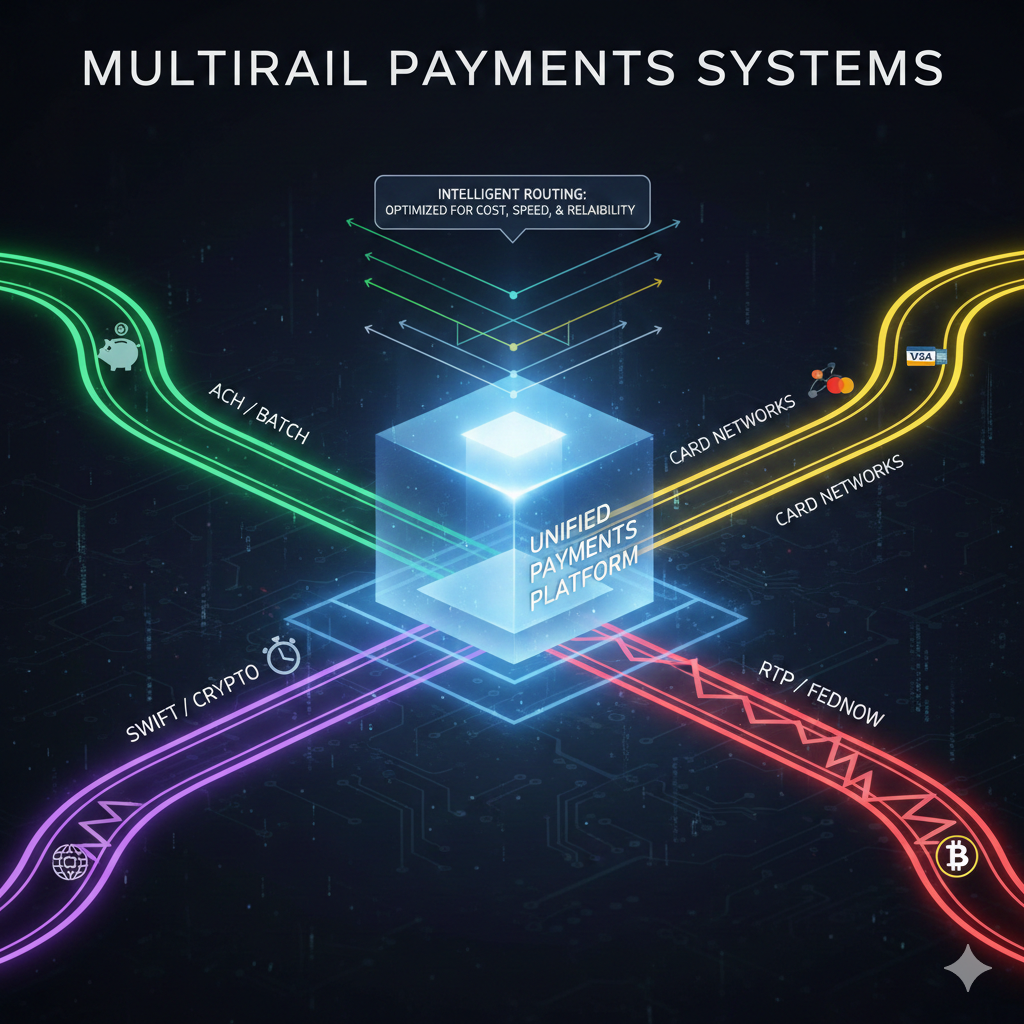
Multirail payment ecosystems

Multirail payment ecosystems are becoming the new operating system of global fintech as CXOs move beyond single-rail dependencies. Bold as many legacy-treasurers and CFOs may be, the era of a single dominant payment rail is over — and the real battleground will be defined by orchestration, not dominance. Real-time account-to-account (A2A) systems, diverse rails (cards, open-banking APIs, digital wallets, RTP networks) and AI-powered orchestration layers are converging. Boards that assume “cards + SWIFT = safe” are dangerously wrong. Here’s why most boards are getting this dangerously wrong — and what the top 1% are doing instead.

Executive Summary

Understanding Multirail Payment Ecosystems
  • Multirail convergence: A2A, real-time, cards, wallets — payment flows are fragmenting; orchestration is becoming the strategic asset.
  • A2A explosion: Real-time A2A is growing globally — >70 countries now support RTP; volumes to double by 2028.
  • Cost & speed advantage: A2A/instant rails threaten 15–25% of future card-transaction growth globally.
  • Interoperability as growth lever: True value lies in cross-rail and cross-border interoperability; fragmentation is the principal bottleneck.
  • AI-driven orchestration rising: AI routing and orchestration significantly reduce payment failures and improve efficiency.
  • Compliance & risk as strategic constraints: Regulatory, liquidity, FX, and fraud-management complexity demand re-architecting.

Read more

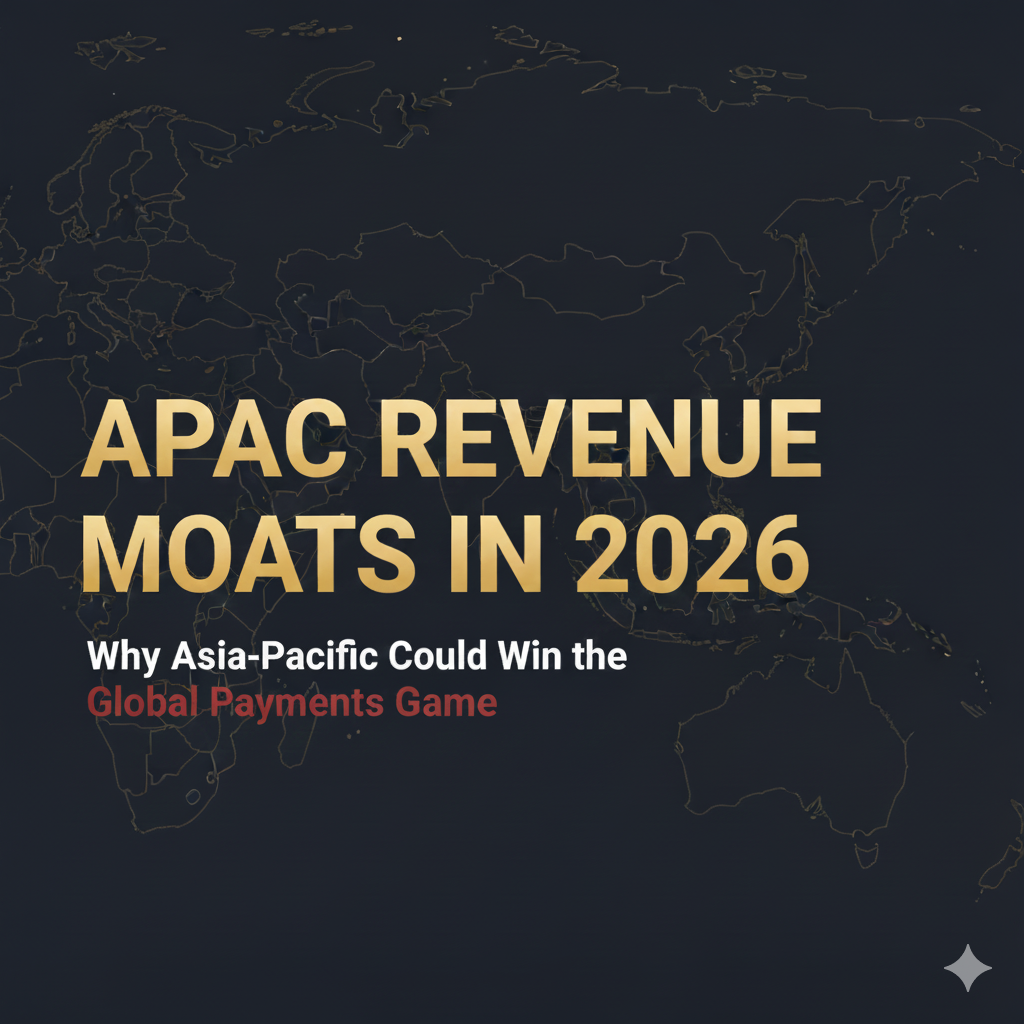
APAC Revenue Moats in 2026 — Why Asia‑Pacific Could Win the Global Payments Game

APAC revenue moats 2026

APAC revenue moats are being misunderstood in 2026 — many global payments leaders still mistake slowing per-transaction yields for structural decline. In reality, APAC’s shifting payments architecture, volume scale, regulatory tailwinds, and embedded trade flows are forging some of the deepest and most durable moats in global payments. The companies that recognize and build around these structural edges — rather than chasing Western-style credit-card economics — will dominate cross-border and digital payments into the next decade.

Here’s why most boards are getting this dangerously wrong — and what the top 1% are doing instead.

Executive Summary

  • Volume scale trumps yield compression. APAC cross‑border flows are on track to nearly double by 2032.
  • Structural shift to real‑time accounts & wallets. Real‑time (A2A) payment volumes in APAC are forecast to double over 2022–2027.
  • Revenue mix is re‑balancing — favoring transaction fees over interest income. As net‑interest income slows, transaction‑based revenues remain resilient globally.
  • Cross‑border demand is backed by remittances + trade corridors. APAC handles over US$700 billion in remittance flows yearly.
  • Innovation & interoperability (stablecoins, digital wallets, CBDCs) give first‑mover advantage. APAC leads in stablecoin adoption for trade settlements and remittances.
  • Regulation and geopolitical fragmentation raise barriers to entry — but deepen moats for incumbents. As global payment rails fragment, local/regional scale becomes a competitive advantage.

Read more