Global Payments Trends 2025: Power Shifts, Risk Transfer, and Margin Compression Reshaping the Industry

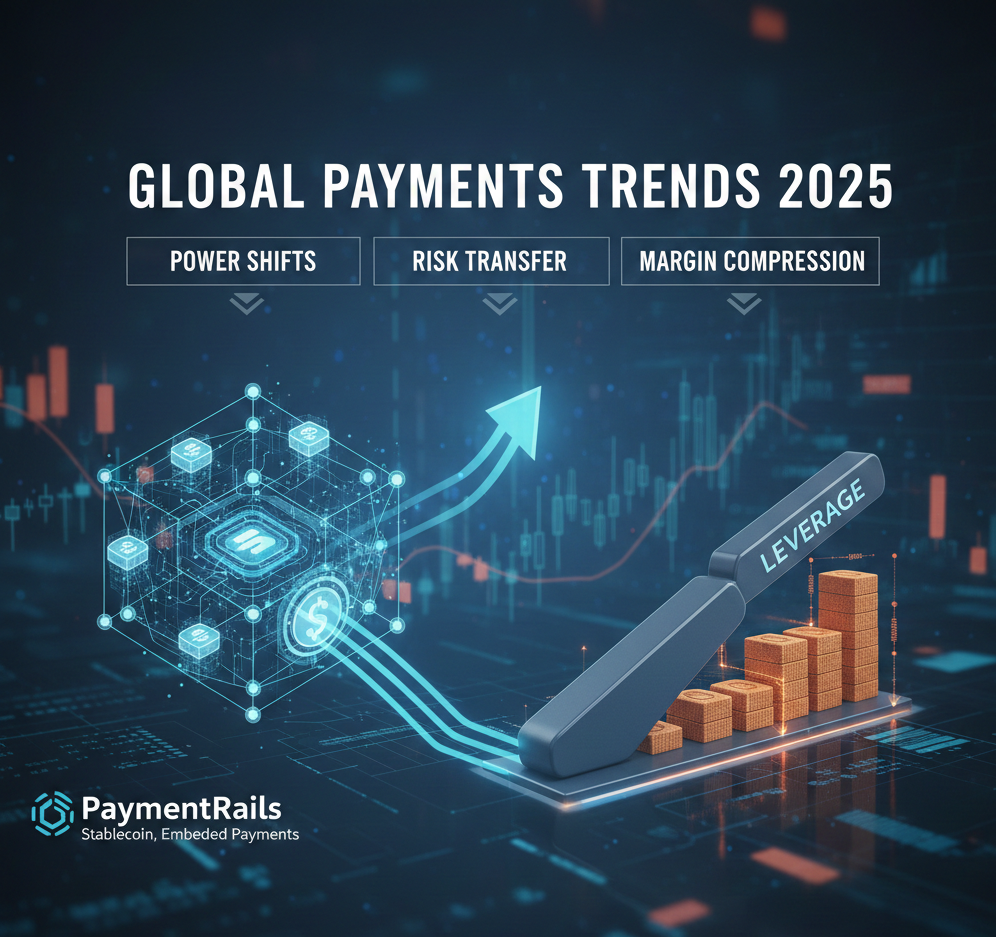
Futuristic fintech graphic illustrating "Global Payments Trends 2025" for PaymentRails, featuring stablecoin and embedded payments data flowing into a "Leverage" lever, highlighting power shifts, risk transfer, and margin compression.

Global payments in 2025 are no longer a race for faster rails or broader reach. In 2025, the fintech landscape have matured beyond speed and reach. Real-time rails, APIs, and ISO 20022 are now baseline. The real transformation is structural: innovation redistributes control, margins, and balance-sheet risk—often from incumbents to platforms and fintechs.

For executives, the question shifts from “How do we innovate?” to “Who captures value as payments become invisible, programmable, and embedded?”
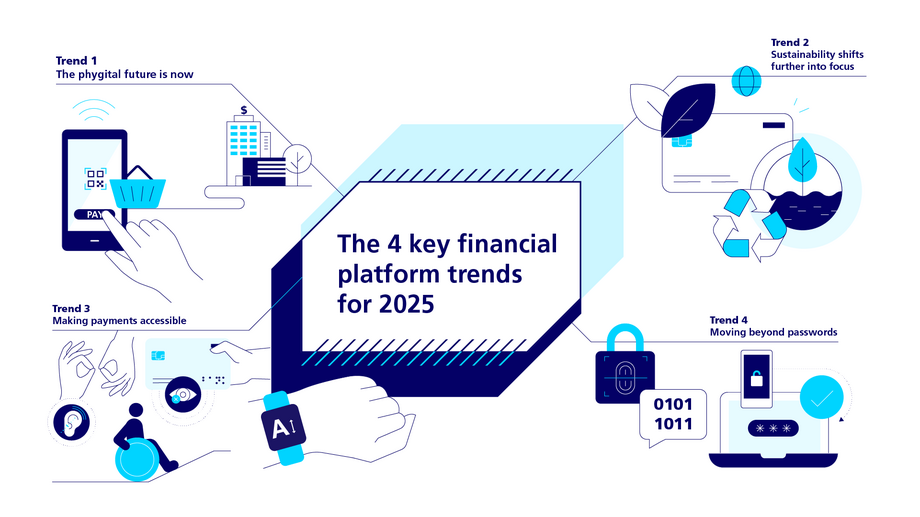
Spotlight-4-Key-Trends-Platforms

Executive Summary

Payments mechanics are converging into utilities. Differentiation now lies in data control, decision logic, risk governance, and margin defense amid automation.

Key forces:

  • Embedded finance transfers risk to distribution points.
  • Real-time systems unlock liquidity but heighten fragility.
  • Modular stacks accelerate commoditization.
  • AI reallocates margins probabilistically.
  • Sustainability incentives (or lack thereof) shape outcomes.

Leaders who explicitly govern these shifts will dominate; those relying on innovation alone risk value leakage.
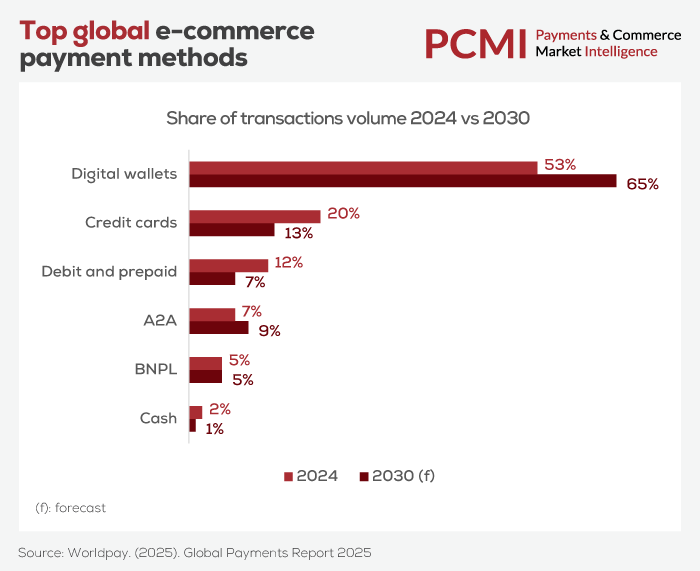
Top_Global_Payment_Methods_2025

Read more

APAC Revenue Moats in 2026 — Why Asia‑Pacific Could Win the Global Payments Game

APAC revenue moats 2026

APAC revenue moats are being misunderstood in 2026 — many global payments leaders still mistake slowing per-transaction yields for structural decline. In reality, APAC’s shifting payments architecture, volume scale, regulatory tailwinds, and embedded trade flows are forging some of the deepest and most durable moats in global payments. The companies that recognize and build around these structural edges — rather than chasing Western-style credit-card economics — will dominate cross-border and digital payments into the next decade.

Here’s why most boards are getting this dangerously wrong — and what the top 1% are doing instead.

Executive Summary

  • Volume scale trumps yield compression. APAC cross‑border flows are on track to nearly double by 2032.
  • Structural shift to real‑time accounts & wallets. Real‑time (A2A) payment volumes in APAC are forecast to double over 2022–2027.
  • Revenue mix is re‑balancing — favoring transaction fees over interest income. As net‑interest income slows, transaction‑based revenues remain resilient globally.
  • Cross‑border demand is backed by remittances + trade corridors. APAC handles over US$700 billion in remittance flows yearly.
  • Innovation & interoperability (stablecoins, digital wallets, CBDCs) give first‑mover advantage. APAC leads in stablecoin adoption for trade settlements and remittances.
  • Regulation and geopolitical fragmentation raise barriers to entry — but deepen moats for incumbents. As global payment rails fragment, local/regional scale becomes a competitive advantage.

Read more

Global Payments Revenue Leadership 2025: Governance, Scale, and Enterprise Growth

Global Payments

Scaling B2B Payments, Revenue Leadership — Most executives still treat global payments as a technology integration problem. In reality, after managing multi-region revenue portfolios exceeding directional multi-billion TPV and closing enterprise mandates across APAC, Europe, and North America, the true binding constraint is commercial governance: deliberate trade-offs across regulation, partnerships, and pricing that directly influence board-approved revenue thresholds, margin protection, and multi-year growth.

Regulatory fragmentation—illustrated by the EU’s Instant Payments Regulation (IPR) deadlines in January and October 2025—and Singapore’s evolving stablecoin frameworks, combined with moderated industry growth (McKinsey 2025: $2.5T revenues in 2024; ~4% CAGR to ~$3T by 2029), exposes a critical misread: feature-led platforms capture pilots; governance-led architectures capture multi-billion profit pools.


Executive Summary

  • Directed multi-billion TPV growth across 11+ jurisdictions with governance-first GTM strategies.
  • Exercised final authority on market expansion, accelerating enterprise conversions 3–5× via bank–fintech alignment.
  • Balanced regulated risk trade-offs to protect margins while unlocking new revenue corridors.
  • Operationalized compliance as a product, cutting legal cycles 30–50% and enabling succession-ready teams.
  • Scaled distributed global teams (100+ staff) with board-aligned KPIs on ACV, renewals, and regulatory exposure.
  • Translated infrastructure reliability into premium pricing, sustaining multi-market margins and non-linear revenue growth.

Read more