
Executive Summary
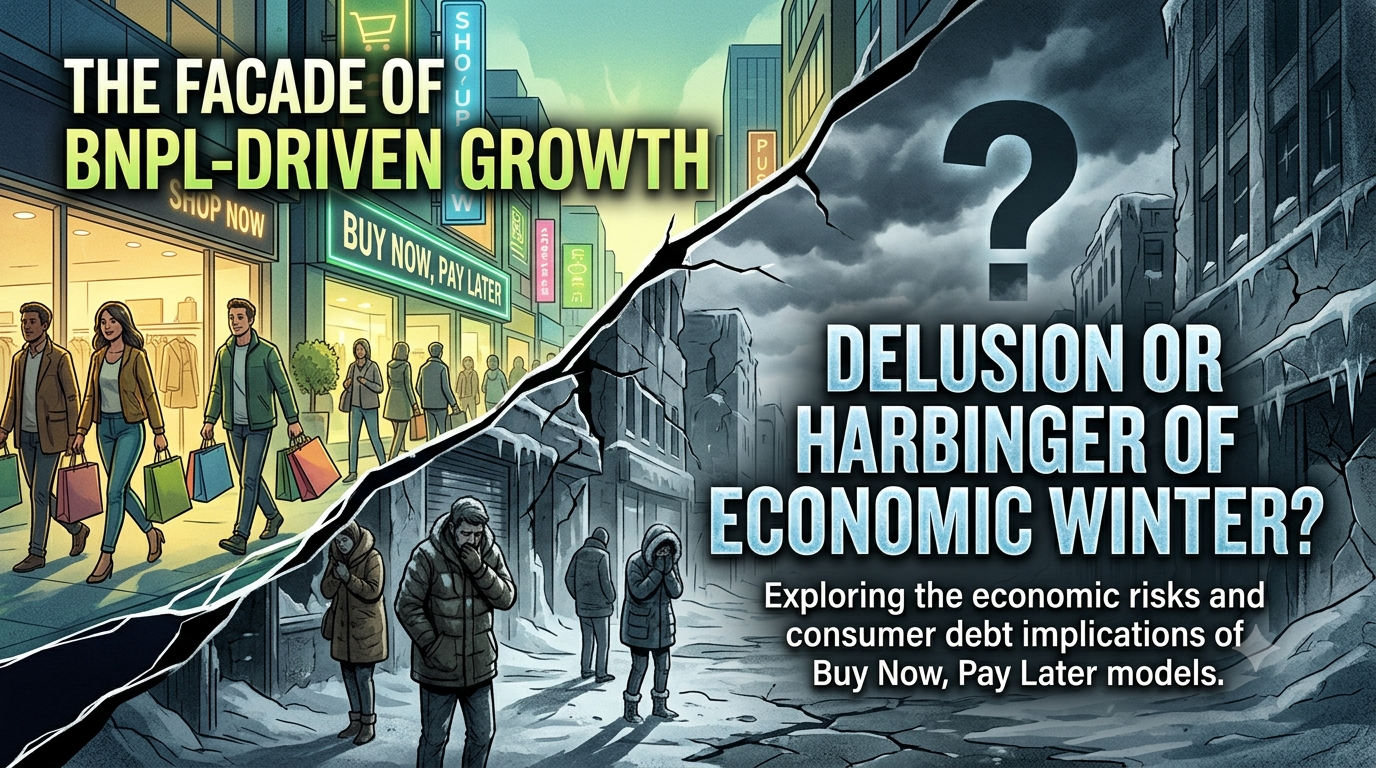
The facade of BNPL (Buy Now, Pay Later) schemes as engines of consumption and sustainable growth warrants careful scrutiny by executive leadership. While BNPL appears to fuel retail activity and expand financial inclusion, it risks masking underlying consumer vulnerabilities that could precipitate a sharper economic contraction. This article examines BNPL through the lens of Maslow’s hierarchy of needs, identifies critical pain points for fintech, payments, and cross-border payments leaders, and outlines pragmatic lessons for navigating potential economic winter. Strategic foresight, rather than unchecked expansion, must guide decision-making to safeguard long-term resilience.
Table of Contents
Introduction
The facade of BNPL driven consumption presents a compelling yet potentially misleading narrative of economic vitality. In an era of subdued wage growth and heightened cost-of-living pressures, BNPL solutions have proliferated, enabling immediate access to goods and services while deferring payment. Proponents highlight increased transaction volumes, customer acquisition, and apparent GDP contributions. However, this model may constitute a delusion that postpones rather than resolves structural weaknesses, setting the stage for a painful economic winter characterized by elevated defaults, reduced discretionary spending, and systemic stress in the financial ecosystem.
Leadership in fintech, global payments, and cross-border remittance must confront this tension. The sector’s innovation must balance short-term growth metrics with the durability of consumer balance sheets and macroeconomic stability.
BNPL in the Context of Maslow’s Hierarchy of Needs
Maslow’s hierarchy provides a useful framework for understanding BNPL’s appeal and its hidden risks. At the base levels physiological needs (food, clothing, shelter) and safety needs (financial security, health) BNPL lowers barriers to immediate gratification. Consumers facing inflationary pressures can secure essentials or modest lifestyle improvements without upfront capital, ostensibly satisfying deficiency needs.
Yet this satisfaction is often illusory. By encouraging debt-financed consumption, BNPL can undermine safety needs over time. Accumulated deferred payments erode financial buffers, transforming short-term relief into long-term anxiety. As individuals progress toward higher tiers belonging, esteem, and self-actualization unsustainable leverage becomes counter productive. Debt overhang restricts investments in education, relationships, or personal development, trapping consumers in cycles of financial precarity.
For executive leaders, this correlation reveals a strategic misalignment; products that address base needs superficially may erode the very stability required for broader economic participation. In cross-border payments and remittances, where families often prioritize essential transfers, BNPL like features layered onto remittance flows could similarly distort priorities, fostering dependency on credit rather than genuine economic uplift.
The Growth Illusion: Drivers and Vulnerabilities
BNPL has demonstrably expanded consumption. Merchants report higher basket sizes and conversion rates, while platforms benefit from interchange fees, late penalties, and data insights. In global payments, integration of BNPL into digital wallets and e-commerce gateways has accelerated user adoption across borders. However, this growth carries structural fragilities. Consumer debt levels, particularly among younger demographics and middle-income segments, have risen in parallel with BNPL penetration. When economic conditions tighten through interest rate shifts, employment softening, or geopolitical disruptions default cascades become probable. The model’s reliance on optimistic repayment assumptions falters under stress, exposing lenders and partners to credit losses.
In cross-border remittance and payments, additional complexities emerge. Currency volatility, regulatory divergence across jurisdictions, and varying consumer protection standards amplify risks. A BNPL feature attached to international transfers might boost volume in the near term but invite scrutiny from regulators concerned with debt exportation and consumer exploitation. Leadership must question whether reported growth reflects genuine demand expansion or merely temporal displacement of future spending.
Pain Points for Fintech and Financial Leaders
Several pain points demand attention:
- Credit Risk Concentration: BNPL often operates with lighter underwriting than traditional credit, concentrating exposure among subprime or thin-file borrowers. In a downturn, this amplifies losses and strains liquidity.
- Regulatory and Compliance Pressures: Authorities worldwide are tightening oversight of non-bank lending. Leaders in global payments must anticipate harmonization challenges, particularly where BNPL intersects with remittance corridors subject to anti-money laundering and consumer finance rules.
- Customer Trust Erosion: Late fees and opaque terms can damage brand equity. Consumers who feel trapped by revolving BNPL obligations may disengage, increasing churn and acquisition costs.
- Macroeconomic Feedback Loops: Widespread BNPL adoption may inflate asset prices (retail, housing) artificially. A correction could trigger negative wealth effects, contracting consumption more severely than if organic growth had prevailed.
- Technological and Partnership Dependencies: Reliance on embedded finance partnerships with retailers or platforms exposes players to counter party risk, especially in cross-border scenarios where data sovereignty and interoperability issues persist.
These pain points underscore the need for robust scenario planning beyond baseline growth projections.
Lessons for Executive Leadership
Leaders in fintech, financial services, cross-border remittance, and global payments should internalize several strategic imperatives:
- Prioritize Balance Sheet Resilience: Stress-test BNPL portfolios under severe recessionary scenarios. Diversify revenue streams beyond credit-dependent products and maintain conservative leverage ratios.
- Align Innovation with Genuine Value: Design offerings that support progression through Maslow’s hierarchy such as tools for savings integration, financial literacy, or flexible repayment aligned with remittance inflows rather than pure consumption acceleration.
- Embed Ethical Underwriting and Transparency: Invest in advanced analytics for responsible lending while clearly communicating terms. In cross-border contexts, localize compliance and consumer protections to build sustainable trust.
- Cultivate Macro Awareness: Monitor leading indicators of consumer health (savings rates, debt-service ratios, labor market slack) and adjust product roadmaps accordingly. Collaboration with regulators and industry peers on responsible innovation standards can mitigate systemic risks.
- Scenario-Based Strategic Planning: Prepare for economic winter through diversified geographic exposure, agile technology stacks, and contingency capital allocation. Those who treat BNPL as a tactical growth lever rather than a core dependency will prove more resilient.
Conclusion
The facade of BNPL as an unqualified driver of consumption and growth merits deliberate re-evaluation. While the model delivers near-term benefits, its potential to exacerbate vulnerabilities and precipitate a deeper economic winter cannot be dismissed. By applying Maslow’s hierarchy as an analytical lens, leaders gain insight into the human and systemic dimensions at stake.
Executive teams that navigate this environment with prudence balancing innovation, risk management, and long-term consumer welfare will position their organizations to thrive amid uncertainty. Sustainable success in fintech and global payments demands more than volume expansion; it requires foresight, integrity, and a commitment to genuine economic contribution.
Disclaimer: This article presents original analysis and strategic perspectives for informational purposes only. It does not constitute financial, investment, legal, or professional advice. Views expressed do not necessarily reflect any institutional position. Economic forecasts and risk assessments inherently involve uncertainty.