
FX Transparency in Banking: Why Opaque Cross-Border Payments Still Destroy Trust

Conceptual image representing FX transparency in banking featuring a golden key frozen in an ice block in front of a bank building, illustrating why opaque cross-border payments destroy customer trust.

Executive Summary

FX transparency in banking is no longer a compliance discussion. It is a commercial reckoning. As cross-border payments volumes exceed $194 trillion annually and move towards $320 trillion by 2032, opaque foreign exchange pricing, embedded spreads, and undisclosed intermediary fees continue to extract billions from corporates and consumers while quietly eroding trust in traditional banking rails. Past misconduct from FX benchmark manipulation to rate opacity was not an anomaly but the predictable outcome of a system designed around limited visibility. This article examines why FX opacity persists, how it distorts P&L outcomes and operational predictability, and why banks that fail to adopt transparent FX models will steadily lose relevance to fintechs and regulator-backed alternatives.

FX opacity in banking is a structural profit centre masquerading as market complexity. Without full transparency on rates, spreads, and fees, trust will continue to collapse; and incumbents will keep losing ground to transparent, API-led competitors.


Read more

Compensation Architecture in Regulated Revenue Models.

A professional corporate banner for "Compensation Architecture in Regulated Revenue Models." The design features a dark blue and green gradient background with technical icons: a gear system with dollar signs, a handshake, and a shield over a bar graph. The text outlines three key goals: Align Incentives, Mitigate Risk, and Scale Profitably.

Compensation architecture shapes enterprise economics in regulated revenue models. Misaligned incentives commonly reward volume over sustainable value, encourage higher-risk exposures, and increase operational/compliance overheads. Volume-driven plans create apparent growth while eroding profitability and elevating regulatory scrutiny. At senior revenue levels, effective design enforces margin discipline, risk calibration, jurisdictional adaptation, and behavioral alignment toward long-term outcomes. … Read more

Credibility: The Most Expensive Decision in Global Payments Leadership

A conceptual image representing global payments leadership featuring a golden scale balanced over a digital globe. One side of the scale holds a crown and gold coins, while the other side holds a glowing blue brain with the word "CREDIBILITY" inscribed. The background features a dark, cinematic city skyline, emphasizing high-stakes financial decision-making.

In 2025’s compressing payments landscape—real-time rails eliminating float, AI surfacing risks instantly, embedded finance diluting margins, and ISO 20022 mandating richer data—credibility is the ultimate balance-sheet asset. Silent leadership (disciplined, low-ego execution) compounds it quietly. Leadership silence (avoidance disguised as caution) erodes it fatally. The executives who thrive will master the distinction: confront risks early and decisively, even when it costs short-term revenue.

Executive Summary

Global payments revenues hit approximately $2.5 trillion in 2025, processing trillions of transactions amid structural shifts: real-time payments surging (37% of merchants accepting them, with 80-90% expecting growth), ISO 20022 migration completing in November, AI-driven operations monetizing, and projected fraud losses climbing toward $400 billion cumulatively this decade.

Margins are under relentless pressure from embedded finance, instant rails, and competition. In this environment, leadership credibility—built through proactive risk confrontation and cultural resilience—determines who retains licenses, partners, and talent.

This piece contrasts silent leadership (aggressive internal action, public restraint) with leadership silence (deferred escalation on known weaknesses). The latter has fueled recent failures in bank-fintech models and fraud scandals. CXOs must audit unspoken risks now: silence is increasingly seen as intent by regulators and markets.

Read more

The Invisible Toll: Hidden Fees in Fintech Payments Are Not Accidental – They are the Business Model

A conceptual digital illustration titled "The Invisible Toll." It features a glowing, shattered glass credit card suspended over stacks of physical coins. Inside the card, glowing red, vein-like structures form a complex, tangled knot, representing a hidden system. Two small, glowing red figures stand on the coins, appearing to manipulate the card from below. The background is a dark, cinematic digital space filled with bokeh light patterns and data streams.

Hidden fees in fintech payments are not accidental pricing anomalies. They are a deliberate revenue architecture optimized for opacity. As cross border payment volumes scale; fintechs increasingly rely on FX spreads, routing deductions, and ancillary charges to subsidise ‘free’ or low headline cost products. While these fees partially compensate for genuine operational complexity, liquidity, compliance, fraud and regulatory fragmentation. Their concealment shifts them from cost recovery into value extraction. For enterprises, the impact is structural margin leakage, forecasting distortion, underpaid invoices, and silent erosion of supplier trust. At scale, hidden fees function as an ungoverned tax on global commerce.

Regulatory pressure and infrastructure advances are now compressing the industry’s ability to hide these costs. The next generation of winners will not eliminate fees, but will reprice trust through explicit FX, predictable settlement, and enterprise grade transparency. CXOs who accept ‘free’ pricing without interrogating its monetization mechanics are complicit in the leakage they later attempt to optimize away.

  • Hidden fees in fintech payments are intentional revenue levers; not system failures.
  • FX spreads and cross-border markups subsidize low headline pricing and growth.
  • Opacity preserves margins but destroys enterprise predictability and trust.
  • For businesses, hidden fees create material P&L leakage, not minor friction.
  • Infrastructure and regulation are reducing technical excuses for concealment.
  • Future winners will charge transparently, not necessarily cheaply.
  • CXOs who ignore fee mechanics outsource governance to payment vendors.

Read more

Global Payments Trends 2025: Power Shifts, Risk Transfer, and Margin Compression Reshaping the Industry

Futuristic fintech graphic illustrating "Global Payments Trends 2025" for PaymentRails, featuring stablecoin and embedded payments data flowing into a "Leverage" lever, highlighting power shifts, risk transfer, and margin compression.

Global payments in 2025 are no longer a race for faster rails or broader reach. In 2025, the fintech landscape have matured beyond speed and reach. Real-time rails, APIs, and ISO 20022 are now baseline. The real transformation is structural: innovation redistributes control, margins, and balance-sheet risk—often from incumbents to platforms and fintechs.

For executives, the question shifts from “How do we innovate?” to “Who captures value as payments become invisible, programmable, and embedded?”

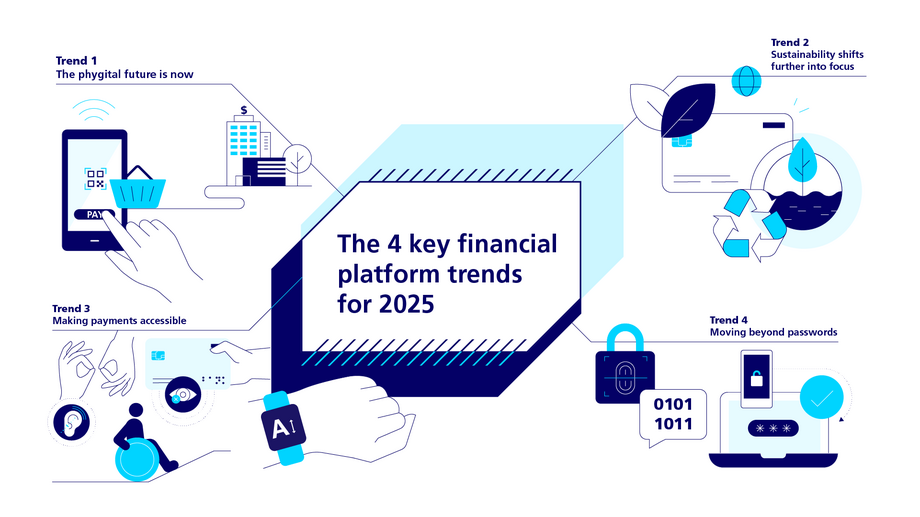
Spotlight-4-Key-Trends-Platforms

Executive Summary

Payments mechanics are converging into utilities. Differentiation now lies in data control, decision logic, risk governance, and margin defense amid automation.

Key forces:

  • Embedded finance transfers risk to distribution points.
  • Real-time systems unlock liquidity but heighten fragility.
  • Modular stacks accelerate commoditization.
  • AI reallocates margins probabilistically.
  • Sustainability incentives (or lack thereof) shape outcomes.

Leaders who explicitly govern these shifts will dominate; those relying on innovation alone risk value leakage.

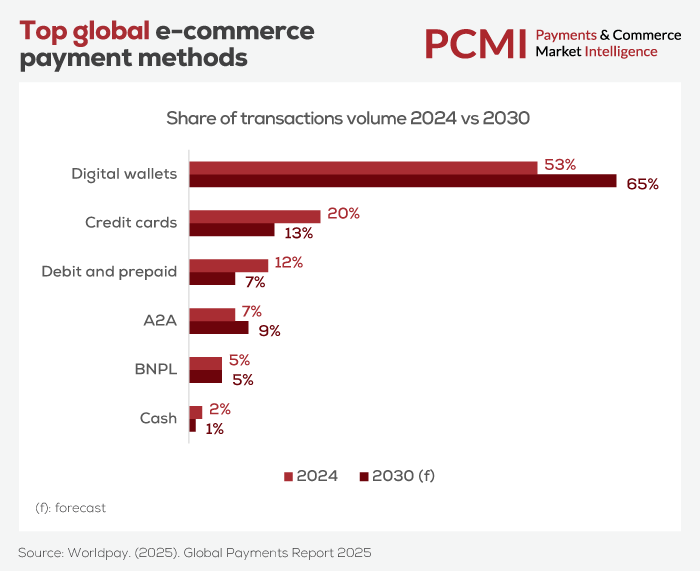
Top_Global_Payment_Methods_2025

Read more

RBI’s Silver Loan Policy 2026 Unlock Household Wealth or Create New Credit Risks

A diverse team of professionals collaborating in a high-tech office environment. A woman stands pointing at a large digital screen displaying various data charts and graphs, while a man in the foreground interacts with a glowing 3D holographic interface. Other team members use laptops and digital tablets, symbolizing modern financial analysis, innovation, and strategic data-driven decision-making.

RBI Silver Loan Policy 2026: From April 2026, RBI allows loans against silver jewellery and coins, formalizing significant dormant household wealth. Short-term, secured credit can boost inclusion and consumption, but volatility, valuation disputes, and uneven rollout create real execution risks. Success hinges on lenders balancing access with disciplined underwriting.

Executive Summary

RBI’s Lending Against Gold and Silver Collateral Directions, 2025 introduces silver as formal collateral from April 2026. This policy:

  • Enables households, especially in rural and semi-urban India, to pledge silver jewellery and coins for short-term loans.
  • Introduces tiered LTV ratios (75–85%) and bullet repayment structures.
  • Offers potential to mobilise billions to trillions in idle household wealth into productive credit.
  • Carries execution risks: volatility, valuation disputes, uneven rollout, and potential over reliance on short-term credit.
  • Creates a strategic tension: access vs discipline, growth vs risk, and short-term liquidity vs long-term credit health.

The reform is timely but its impact depends on lenders’ pricing strategies, risk management, and rural penetration.

Read more

Banking Automation in Transition for Global Payments

Banking Automation Futuristic digital globe illustrating global payment networks with interconnected nodes, glowing data streams, and abstract financial connections on a dark blue background. Centered bold white text reads: 'Banking Automation in Transition for Global Payments

Executive Summary

Banking automation in global payments has crossed a structural tipping point. What was once a back-office efficiency initiative is now a decisive power shift that determines who controls customer relationships, data, and margins.

Standardization through ISO 20022 and real-time payment rails reduces friction—but it also commoditizes differentiation. Banks that treat automation as compliance plumbing will meet regulatory deadlines and still lose pricing power. Those that treat it as a data and intelligence foundation can reclaim margin through orchestration, risk ownership, and value-added services.

Real-time payments and AI-driven automation fundamentally change risk dynamics. Speed without end-to-end automation amplifies fraud, liquidity stress, and operational failure. Partial automation is worse than none. AI accelerates both value creation and error propagation; without clean data and clear commercial ownership, it becomes a regulatory and revenue liability.

The core leadership trade-offs are unavoidable:

  • Control vs. convenience in build-versus-partner decisions
  • Speed vs. risk containment in real-time rails
  • Compliance vs. monetization in ISO 20022 adoption

Over the next 12–36 months, banks will diverge sharply. Some will modernize on paper—compliant, connected, and operationally busy—yet continue to cede margin and customer ownership. Others will internalize complexity, invest in data-first automation, and use intelligence—not rails—to defend relevance.

Automation is no longer about efficiency. It is the battleground for control in global payments.

Read more

Stablecoin-as-a-Service: How Coinbase Is Building the Future of Global Payments

Chart showing stablecoin market capitalization growth to over $310 billion in December 2025, highlighting USDC and global adoption trends

Executive Summary

  • Stablecoin-as-a-service is moving payments from experimentation to production.
  • Coinbase is productizing USDC payments for merchants and enterprises at scale.
  • Distribution, regulation, and reserve economics form Coinbase’s first-mover moat.
  • Revenue is driven by volume, on-platform balances, and reserve yield sharing.
  • Execution risks remain: liquidity shocks, banking exposure, and regulation.
  • Success would position Coinbase as core payments infrastructure, not a crypto exchange.

Read more

FX Rails Bottlenecks in SEA: Strategies for Smoother Enterprise Integrations

Map of Southeast Asia (SEA) showing fragmented FX rails and cross-border payment corridors in countries like Singapore, Indonesia, Thailand, and Vietnam, illustrating FX rails bottlenecks SEA

Executive Summary

FX rails bottlenecks SEA persist as a major hurdle for enterprises. Southeast Asia’s FX rails remain fragmented and slow, creating operational bottlenecks that impact cross-border payments, liquidity management, and enterprise P&L. Multi-leg conversions, legacy banking infrastructure, and divergent regulatory frameworks make enterprise integration complex and costly.

Key strategies for smoother FX operations:

  • API-led payment orchestration – unify multiple FX rails under a single integration layer.
  • Centralized liquidity management – optimize cash positioning and reduce settlement delays.
  • Modular compliance frameworks – adapt dynamically to market-specific FX regulations.
  • Tiered Tier-1 bank partnerships – prioritize high-volume corridors while optimizing cost and risk.
  • Predictive FX analytics – minimize slippage, mitigate volatility, and improve reconciliation.

Enterprises that implement these strategies will accelerate settlement, reduce FX costs, and enhance ARR growth, while positioning themselves to leverage upcoming developments like ISO 20022 standardization, RTGS expansion, and CBDCs.

Bottom line: FX rails bottlenecks in SEA are a strategic revenue challenge, not just a technical issue. Proactive integration and orchestration are essential for enterprise-scale growth.

Read more

Enterprise Cross-Border Payments 2026: CEO & SVP Playbook for $240 Trillion Market

Digital world map representing global enterprise payment rails, cross-border revenue strategy, and financial technology networks.

The Enterprise Cross-Border Payments 2026 landscape is undergoing a structural transformation. The fragmented network of correspondent banks—once slow, opaque, and costly—is giving way to a unified, data-rich, and autonomous financial fabric. For CEOs and SVPs of Sales, the next 12 months are shaping up as a “Liquidity War,” where competitive advantage comes not from simply moving money, but from optimizing the intelligence and data surrounding every transaction.

Executive Summary

The Enterprise Cross-Border Payments 2026 landscape is undergoing a structural transformation. Key takeaways for CEOs and SVPs:

  • Liquidity War: Optimize data and intelligence, not just money movement.
  • ISO 20022: Unlock semantic data for AI-driven treasury and risk management.
  • Instant Rails: Connect domestic real-time systems (UPI, Pix, FedNow) into multilateral corridors.
  • Stablecoins 2.0: Emerging as regulated B2B settlement rails with cost reduction potential.
  • Agentic AI: Deploy AI agents for FX optimization, compliance, and Smart Acceptance.
  • Regulatory Readiness: Embrace digital identity and Unified Trade Intelligence.
  • Strategic Action: Weaponize data, integrate stablecoins, govern AI, align sales to payment strategy.

Read more