


Client Escalation Is a Margin Event: How SVP Revenue Leaders Defend P&L While Preserving Enterprise Relationships

A professional corporate banner with a dark navy blue background featuring a blurred cityscape and silhouettes of business professionals. The left side displays a gold line graph icon and the bold white text "ESCALATION IS A MARGIN EVENT." The right side contains the subtext "Learn How SVP Revenue Leaders Defend P&L While Preserving Enterprise Relationships" next to a small gold shield icon. A "ProfitGuard Advisors" logo is in the bottom right corner.

Client Escalations are never just emotional, they are economic precursor of incoming. In enterprise fintech, payments, or regulated B2B environments, a single client escalation can represent: 8-20% of annual revenue concentration, multi-year contract exposure, renewal risk cascading across regions, immediate margin compression, internal delivery burnout and board-level reporting implications When escalations hit the executive layer, … Read more

Banking Automation Didn’t Fix Cross-Border Payments. It Just Moved the Hidden Risk!

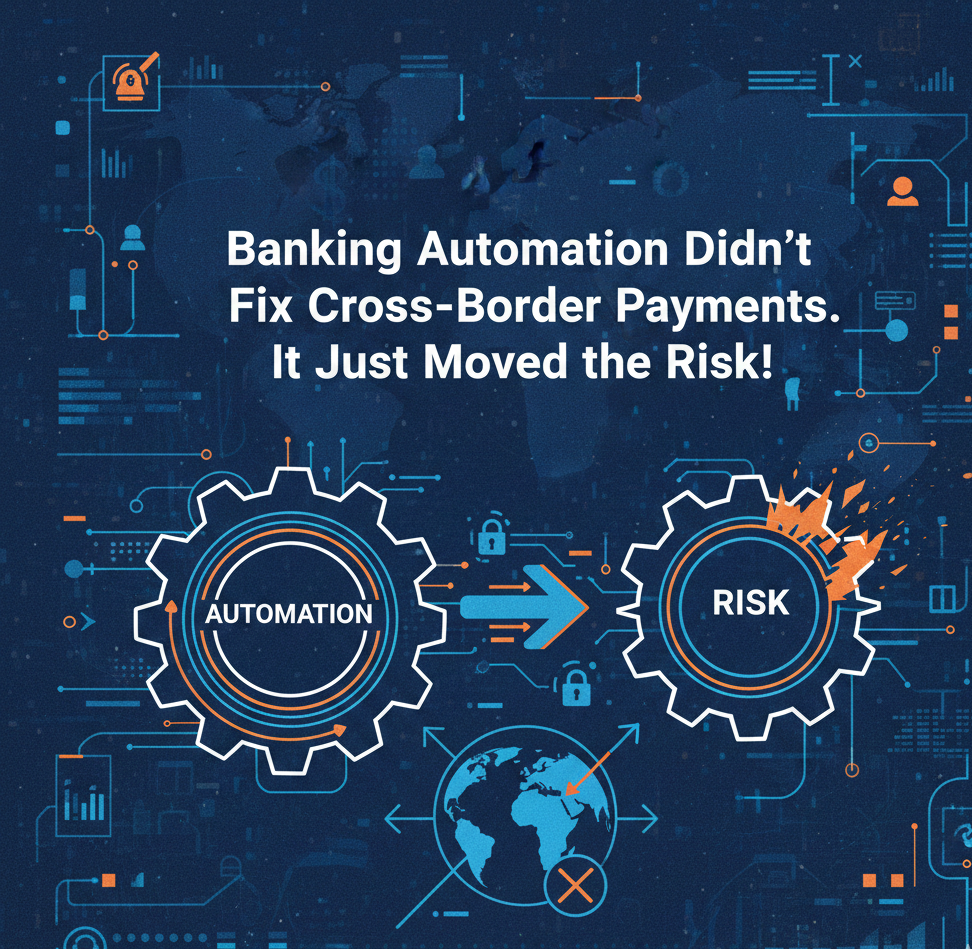
A conceptual infographic showing a blue gear labeled "Automation" passing an arrow to a burning gear labeled "Risk" over a world map, titled "Banking Automation Didn’t Fix Cross-Border Payments. It Just Moved the Risk!"

Banking Automation has unquestionably improved the mechanics of global and cross-border payments. Settlement is faster. Reconciliation is cleaner. Fraud detection is sharper.
But after nearly 2 decades operating inside regulated, high-friction payment corridors; particularly across APAC, I have learned a harder truth: automation doesn’t eliminate risk, it re-distributes it.

Speed replaces visibility. Efficiency trades off against regulatory resilience. AI closes one class of fraud while quietly opening another.

Customer Understanding is not a value. It’s a Trade-Off.

Infographic for Customer Understanding featuring icons for identifying needs, analyzing market trends, and developing marketing strategies.

Customer Understanding in banking automation and global payments is often treated a a value statement. In practice, it is a hard go-to-market trade-off. This article examines why shallow customer insight drives GTM failure, margin erosion, and post-sale churn; and why firms that invest in real operational understanding often pay a short-term revenue price before compounding long-term growth. Drawing on lived experiences across cross-border payments in regulated APAC markets, it unpacks the uncomfortable decisions leaders must make to build durable and non-commoditized revenue.

Compensation Architecture in Regulated Revenue Models.

A professional corporate banner for "Compensation Architecture in Regulated Revenue Models." The design features a dark blue and green gradient background with technical icons: a gear system with dollar signs, a handshake, and a shield over a bar graph. The text outlines three key goals: Align Incentives, Mitigate Risk, and Scale Profitably.

Compensation architecture shapes enterprise economics in regulated revenue models. Misaligned incentives commonly reward volume over sustainable value, encourage higher-risk exposures, and increase operational/compliance overheads. Volume-driven plans create apparent growth while eroding profitability and elevating regulatory scrutiny. At senior revenue levels, effective design enforces margin discipline, risk calibration, jurisdictional adaptation, and behavioral alignment toward long-term outcomes. … Read more

Sustainable Fintech: Embedding ESG into Cross-Border Payments and Banking Automation – Outlook 2025–2030

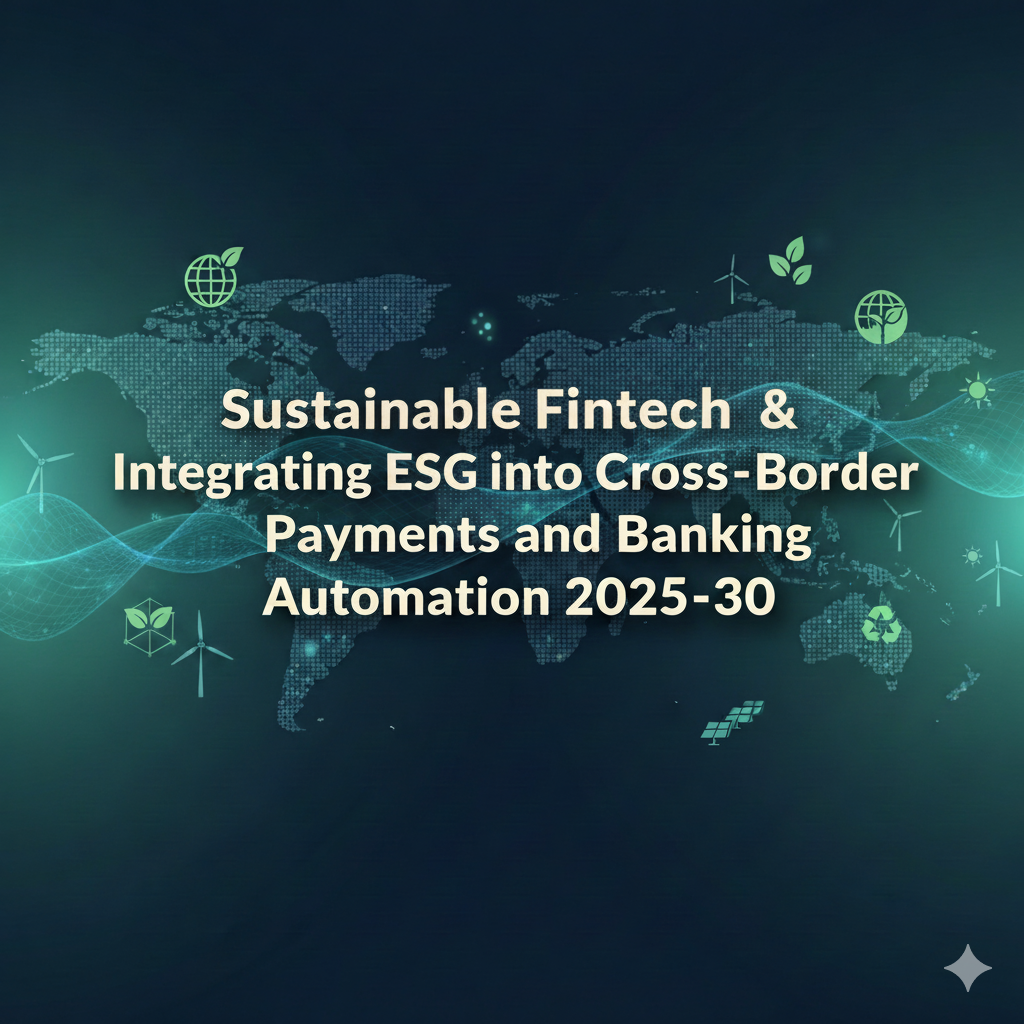
ESG framework applied to sustainable fintech cross-border payment systems

Sustainable fintech is no longer a marketing footnote. In 2025, ESG is no longer a compliance checkbox—it’s a strategic lever for profitability, risk mitigation, and global expansion. Global cross-border payments messaging and flows approach ~$1 quadrillion annually (including wholesale/FX per IMF 2025), while retail/commercial markets hit ~$220-250B in value with flows projected to $290T by 2030. Stablecoin on-chain volumes reached ~$27-30T in 2024 (largely trading + payments, including bot activity). Fintechs and banks embedding ESG at the infrastructure layer—leveraging AI for real-time reporting, blockchain/stablecoins for traceable low-friction flows, and ISO 20022 for rich data—are unlocking profit pools in sustainable trade finance, green remittances, and carbon-conscious lending. Laggards face penalties, divestment, and obsolescence in a decarbonizing economy.

Executive Summary

  • ESG integration turns cross-border payments from cost centers into revenue drivers via green products/efficiency.
  • Stablecoins/blockchain enable low-cost, instant settlements with indirect carbon reductions (fewer intermediaries).
  • AI automation streamlines ESG reporting/compliance, delivering 30-40% efficiency gains in workflows.
  • ISO 20022 migration (completed Nov 2025) enables structured data for transparency and potential ESG tagging.
  • Climate fintech funding surges; sustainable startups outperform broader sector in VC.
  • First movers build moats, tapping multi-trillion sustainable finance opportunities by 2030.

Read more