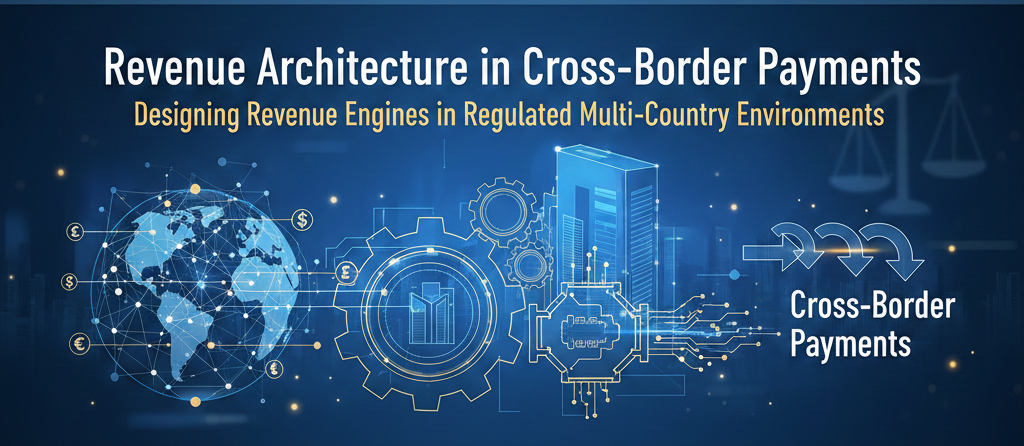


Revenue Architecture in Cross-Border Payments: Designing Revenue Engines in Regulated Multi-Country Environments

Professional digital banner for "Revenue Architecture in Cross-Border Payments," featuring a glowing global network, financial gear mechanisms, and circuit board motifs on a dark blue background to represent FinTech infrastructure and international regulation.

Revenue Architecture in Cross-Border Payments is the structural backbone of any serious multi-country fintech operating inside regulated environments. It determines how revenue behaves under licensing constraints, liquidity requirements, FX volatility, and compliance overhead, not just how revenue is booked in CRM dashboards. Too often, growth in cross-border payments is framed as a sales achievement. In … Read more

Global Payments Leadership: When to Guide and When to Step Back for Growth?

A professional split-screen banner for "Global Payments Leadership." The left side shows a diverse team of executives standing on a digital globe with the text "When to Guide..." The right side features a glowing upward arrow with professionals ascending, accompanied by the text "...and when to step back for growth?" The design uses a sophisticated blue and gold color palette.

Global payments remain high-friction: layered correspondent networks, FX swings, multi-jurisdictional compliance (e.g., evolving PSD3 in Europe, APAC data residency rules, African instant-payment mandates), and now agentic AI introducing autonomous transaction flows. Leaders face the perennial question: When to step in versus step back?From scaling operations in APAC (real-time schemes like FAST/UPI linkages) and Africa I … Read more

The Phantom P&L: Why Your APAC Payment Corridor Is Bleeding Revenue Through Authority Gaps

Here are the individual text elements for your image: Alt Text "The Phantom P&L" written in a terracotta-colored, Gothic-style font centered on a solid light green background

Phantom P&L is the revenue loss that never appears on your income statement, but quietly erodes your APAC payment corridors through authorization latency. In 2020, I watched a South Asia based fintech lose $4.2M in six months on a single cross-border corridor (SGD-IDR-USD). Not from fraud. Not from regulatory rejection. But from authorization latency.

The country manager in Jakarta had accountability for $18M annual revenue. She lacked authority to approve vendor contracts above SGD20,000 without cascading sign-offs through Regional HQ. A critical liquidity provider switch necessary because Bank Indonesia (BI) suddenly required enhanced KYC documentation and it stalled for 11 weeks. During those 77 days, transactions routed through a backup corridor charging 34 bps higher FX spreads. The leakage was $47,000 daily. By the time we got the approval for the vendor change, the original liquidity provider had frozen their facility entirely under new BI guidance.

This is not “accountability without authority.” This is the Phantom P&L—a shadow profit-and-loss center created when regulatory compliance owns the no but operational leadership owns the failure.

Read more

Recovering Credibility After an Executive Escalation: The High Cost of the “Yes” Man!

A professional graphic designed for corporate leadership and management training. The image features high-contrast blue typography against a vibrant yellow background, highlighting the title "Recovering Credibility After An Executive Escalation." This visual serves as a primary header for articles, blog posts, or LinkedIn content focused on crisis management, professional reputation repair, and workplace communication strategies. It is optimized for professionals seeking actionable advice on navigating high-stakes office dynamics and restoring their standing with senior leadership.

Recovering credibility in enterprise fintech infrastructure, particularly regarding cross-border payments in APAC, is the most dangerous stance for a revenue leader to take, as it often leads to an unqualified early “yes” when underlying constraints make delivery improbable.

I walked into the wreckage of exactly that decision about few years ago. A Tier‑1 global corporate client had been sold a “rapid go‑live” narrative for a multi‑corridor integration that casually dismissed the realities of APAC regulatory onboarding, fragmented liquidity provisioning, and our own engineering capacity. By the time the account landed on my desk, dissatisfaction had already metastasized into a full executive escalation. Termination language was on the table. Our CEO, CRO, and executive leadership were all copied in emails. Nobody was talking about solutions anymore, only blame.

What followed wasn’t a heroic recovery driven by speed or persuasion. We clawed the account back by doing the one thing enterprise clients never expect from a vendor under fire: we slowed everything down deliberately, publicly, and without mitigation language.

That decision carried real cost. It also permanently reshaped how I think about credibility, GTM discipline, and executive judgment in regulated markets.


Read more

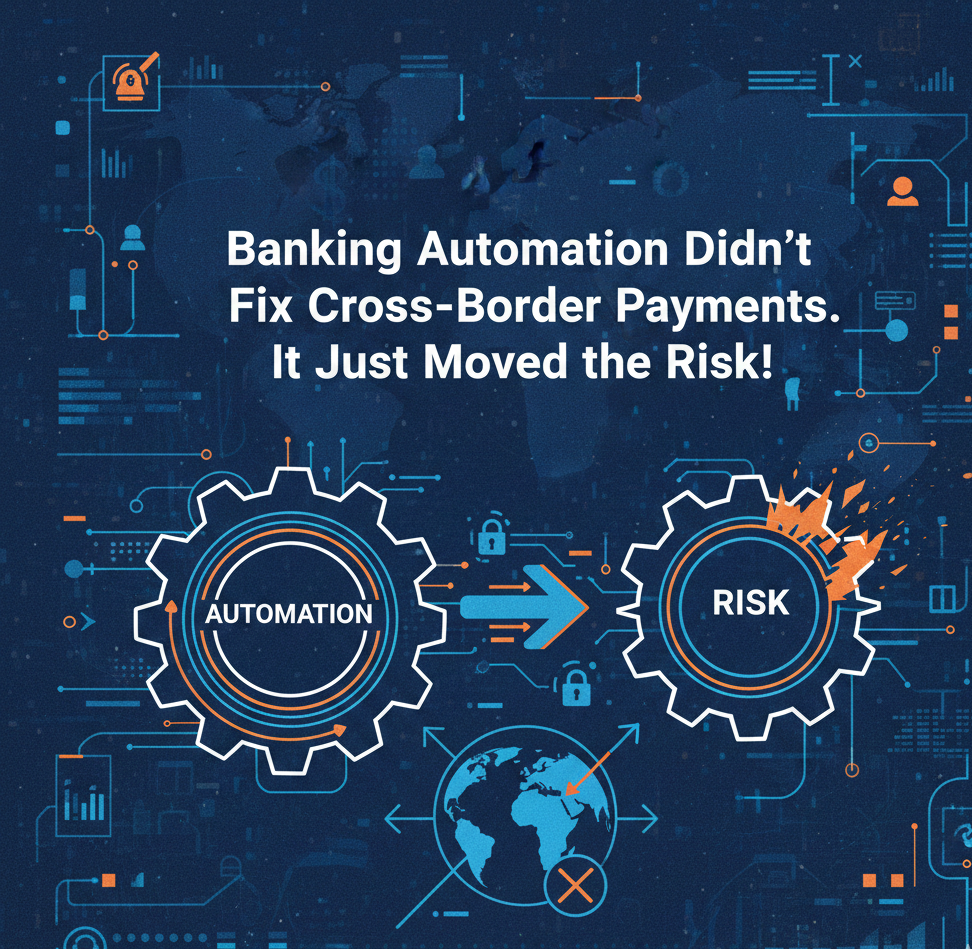
Banking Automation Didn’t Fix Cross-Border Payments. It Just Moved the Hidden Risk!

A conceptual infographic showing a blue gear labeled "Automation" passing an arrow to a burning gear labeled "Risk" over a world map, titled "Banking Automation Didn’t Fix Cross-Border Payments. It Just Moved the Risk!"

Banking Automation has unquestionably improved the mechanics of global and cross-border payments. Settlement is faster. Reconciliation is cleaner. Fraud detection is sharper.
But after nearly 2 decades operating inside regulated, high-friction payment corridors; particularly across APAC, I have learned a harder truth: automation doesn’t eliminate risk, it re-distributes it.

Speed replaces visibility. Efficiency trades off against regulatory resilience. AI closes one class of fraud while quietly opening another.

FX Transparency in Banking: Why Opaque Cross-Border Payments Still Destroy Trust

Conceptual image representing FX transparency in banking featuring a golden key frozen in an ice block in front of a bank building, illustrating why opaque cross-border payments destroy customer trust.

Executive Summary

FX transparency in banking is no longer a compliance discussion. It is a commercial reckoning. As cross-border payments volumes exceed $194 trillion annually and move towards $320 trillion by 2032, opaque foreign exchange pricing, embedded spreads, and undisclosed intermediary fees continue to extract billions from corporates and consumers while quietly eroding trust in traditional banking rails. Past misconduct from FX benchmark manipulation to rate opacity was not an anomaly but the predictable outcome of a system designed around limited visibility. This article examines why FX opacity persists, how it distorts P&L outcomes and operational predictability, and why banks that fail to adopt transparent FX models will steadily lose relevance to fintechs and regulator-backed alternatives.

FX opacity in banking is a structural profit centre masquerading as market complexity. Without full transparency on rates, spreads, and fees, trust will continue to collapse; and incumbents will keep losing ground to transparent, API-led competitors.

Read more

Compensation Architecture in Regulated Revenue Models.

A professional corporate banner for "Compensation Architecture in Regulated Revenue Models." The design features a dark blue and green gradient background with technical icons: a gear system with dollar signs, a handshake, and a shield over a bar graph. The text outlines three key goals: Align Incentives, Mitigate Risk, and Scale Profitably.

Compensation architecture shapes enterprise economics in regulated revenue models. Misaligned incentives commonly reward volume over sustainable value, encourage higher-risk exposures, and increase operational/compliance overheads. Volume-driven plans create apparent growth while eroding profitability and elevating regulatory scrutiny. At senior revenue levels, effective design enforces margin discipline, risk calibration, jurisdictional adaptation, and behavioral alignment toward long-term outcomes. … Read more

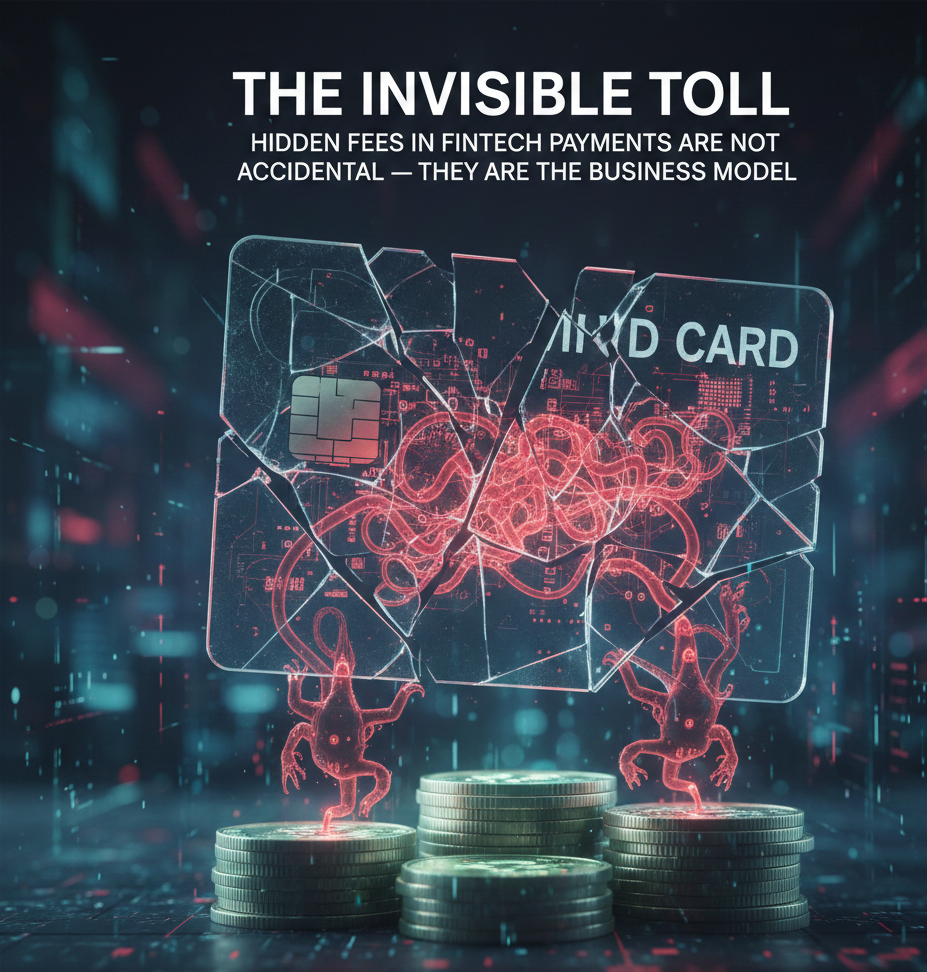
The Invisible Toll: Hidden Fees in Fintech Payments Are Not Accidental – They are the Business Model

A conceptual digital illustration titled "The Invisible Toll." It features a glowing, shattered glass credit card suspended over stacks of physical coins. Inside the card, glowing red, vein-like structures form a complex, tangled knot, representing a hidden system. Two small, glowing red figures stand on the coins, appearing to manipulate the card from below. The background is a dark, cinematic digital space filled with bokeh light patterns and data streams.

Hidden fees in fintech payments are not accidental pricing anomalies. They are a deliberate revenue architecture optimized for opacity. As cross border payment volumes scale; fintechs increasingly rely on FX spreads, routing deductions, and ancillary charges to subsidise ‘free’ or low headline cost products. While these fees partially compensate for genuine operational complexity, liquidity, compliance, fraud and regulatory fragmentation. Their concealment shifts them from cost recovery into value extraction. For enterprises, the impact is structural margin leakage, forecasting distortion, underpaid invoices, and silent erosion of supplier trust. At scale, hidden fees function as an ungoverned tax on global commerce.

Regulatory pressure and infrastructure advances are now compressing the industry’s ability to hide these costs. The next generation of winners will not eliminate fees, but will reprice trust through explicit FX, predictable settlement, and enterprise grade transparency. CXOs who accept ‘free’ pricing without interrogating its monetization mechanics are complicit in the leakage they later attempt to optimize away.

  • Hidden fees in fintech payments are intentional revenue levers; not system failures.
  • FX spreads and cross-border markups subsidize low headline pricing and growth.
  • Opacity preserves margins but destroys enterprise predictability and trust.
  • For businesses, hidden fees create material P&L leakage, not minor friction.
  • Infrastructure and regulation are reducing technical excuses for concealment.
  • Future winners will charge transparently, not necessarily cheaply.
  • CXOs who ignore fee mechanics outsource governance to payment vendors.

Read more

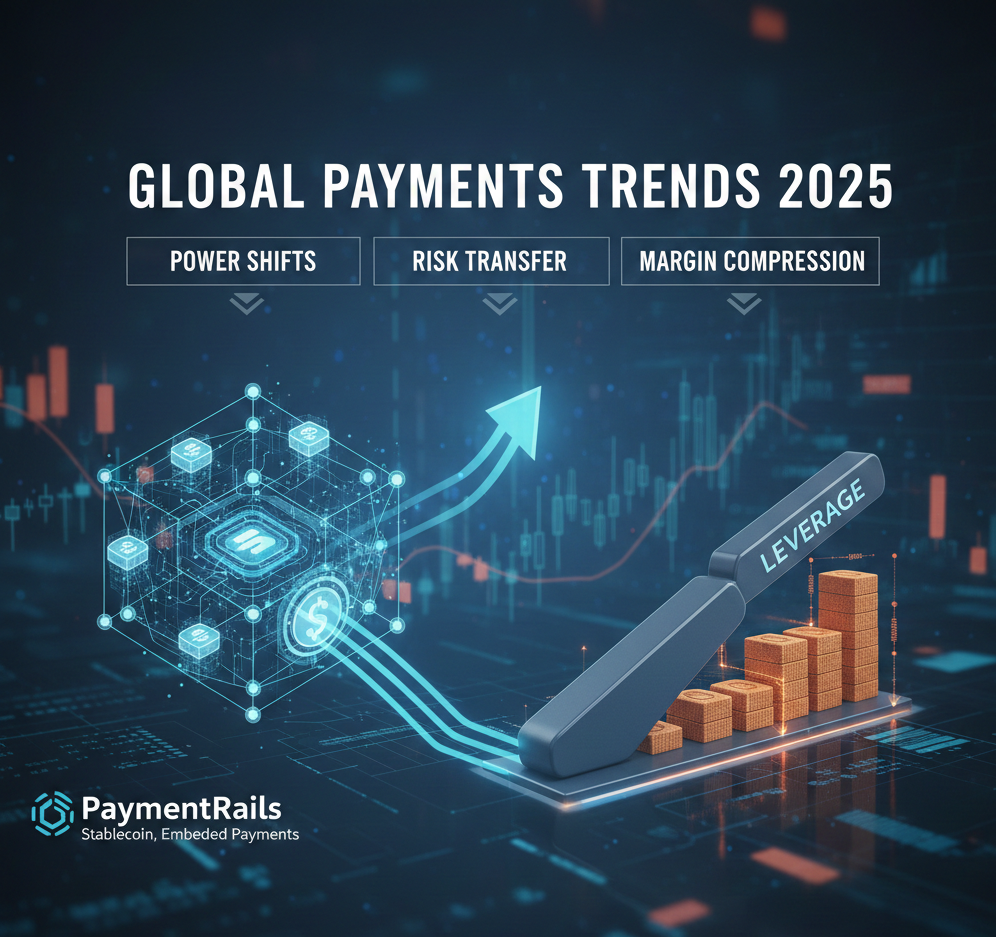
Global Payments Trends 2025: Power Shifts, Risk Transfer, and Margin Compression Reshaping the Industry

Futuristic fintech graphic illustrating "Global Payments Trends 2025" for PaymentRails, featuring stablecoin and embedded payments data flowing into a "Leverage" lever, highlighting power shifts, risk transfer, and margin compression.

Global payments in 2025 are no longer a race for faster rails or broader reach. In 2025, the fintech landscape have matured beyond speed and reach. Real-time rails, APIs, and ISO 20022 are now baseline. The real transformation is structural: innovation redistributes control, margins, and balance-sheet risk—often from incumbents to platforms and fintechs.

For executives, the question shifts from “How do we innovate?” to “Who captures value as payments become invisible, programmable, and embedded?”

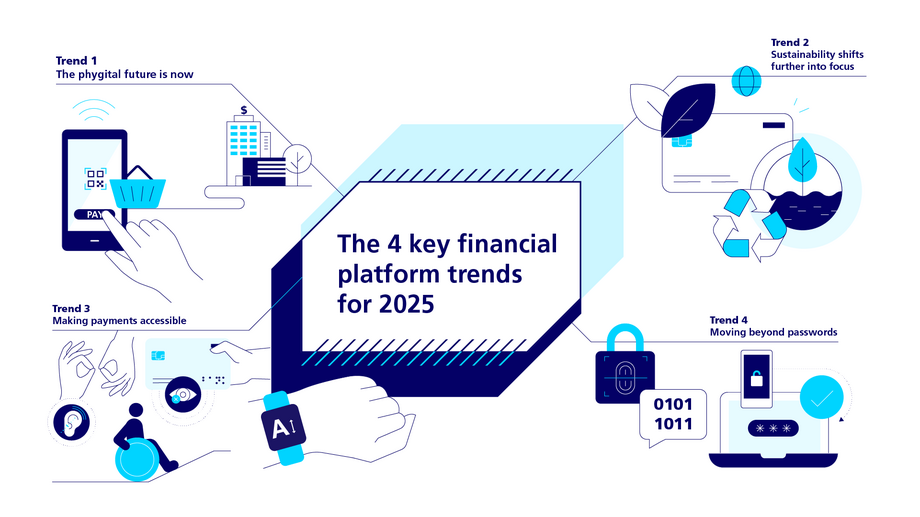
Spotlight-4-Key-Trends-Platforms

Executive Summary

Payments mechanics are converging into utilities. Differentiation now lies in data control, decision logic, risk governance, and margin defense amid automation.

Key forces:

  • Embedded finance transfers risk to distribution points.
  • Real-time systems unlock liquidity but heighten fragility.
  • Modular stacks accelerate commoditization.
  • AI reallocates margins probabilistically.
  • Sustainability incentives (or lack thereof) shape outcomes.

Leaders who explicitly govern these shifts will dominate; those relying on innovation alone risk value leakage.

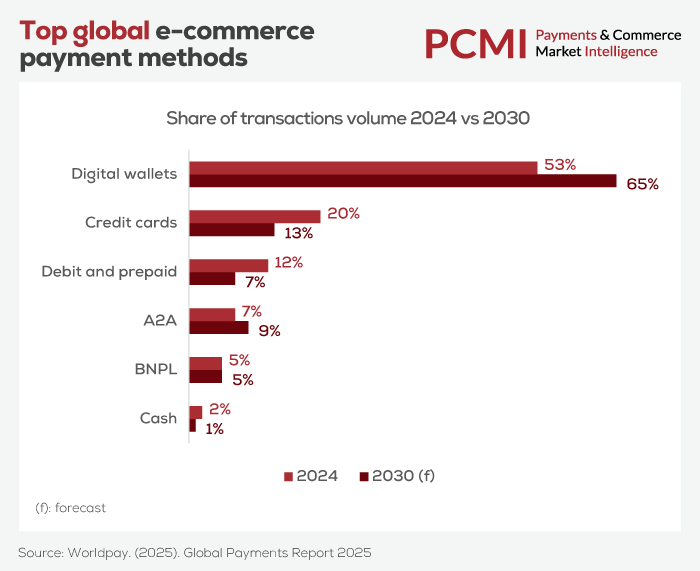
Top_Global_Payment_Methods_2025

Read more

Enterprise Cross-Border Payments 2026: CEO & SVP Playbook for $240 Trillion Market

Digital world map representing global enterprise payment rails, cross-border revenue strategy, and financial technology networks.

The Enterprise Cross-Border Payments 2026 landscape is undergoing a structural transformation. The fragmented network of correspondent banks—once slow, opaque, and costly—is giving way to a unified, data-rich, and autonomous financial fabric. For CEOs and SVPs of Sales, the next 12 months are shaping up as a “Liquidity War,” where competitive advantage comes not from simply moving money, but from optimizing the intelligence and data surrounding every transaction.

Executive Summary

The Enterprise Cross-Border Payments 2026 landscape is undergoing a structural transformation. Key takeaways for CEOs and SVPs:

  • Liquidity War: Optimize data and intelligence, not just money movement.
  • ISO 20022: Unlock semantic data for AI-driven treasury and risk management.
  • Instant Rails: Connect domestic real-time systems (UPI, Pix, FedNow) into multilateral corridors.
  • Stablecoins 2.0: Emerging as regulated B2B settlement rails with cost reduction potential.
  • Agentic AI: Deploy AI agents for FX optimization, compliance, and Smart Acceptance.
  • Regulatory Readiness: Embrace digital identity and Unified Trade Intelligence.
  • Strategic Action: Weaponize data, integrate stablecoins, govern AI, align sales to payment strategy.

Read more